


Quick Summary: Unlike the Western dragon, the Chinese Dragon (Loong) is a symbol of luck, power, and wisdom. This guide explores its origins, the evolution of its Chinese character, and its unique place in the 12 Zodiac signs.
The Symbolism of Dragons in Chinese Culture: The Sound of Nature
In ancient China, the concept of the dragon originated from the sound “Long Long” (隆隆)—the rumble of thunder. In an agricultural society, rain was the lifeblood of the people.
Ancient people believed a divine being controlled the wind, lightning, and rain. The roar of thunder, the rolling of mudslides, and the low growls of alligators or pythons were all perceived as manifestations of this mysterious power. Thus, the name “Long” (龙) was born to describe this ruler of nature.
Learn authentic Chinese from those who live and breathe the culture.
Specially tailored for kids aged 3-18 around the world!
Get started free!The Evolution of the Character “龙” (Dragon)
As a mythical creature, the dragon’s image was crafted through centuries of imagination. We can see this evolution through Chinese calligraphy:


Oracle Bone Script (甲骨文): 3,000 years ago, the character looked like a giant beast with a sharp horn on its head.
Seal Script (篆书): During the Qin and Han dynasties, details like claws and dorsal fins were added, reflecting a more sophisticated artistic style.
Modern Script (楷书): Today’s “龙” character represents the majestic and powerful form we recognize worldwide.
Why is the Dragon 5th in the Zodiac?
The Dragon is the only mythical creature in the Chinese Zodiac, yet it ranks 5th—behind the Rat, Ox, Tiger, and Rabbit. This is tied to the Earthly Branches (地支):
The dragon corresponds to “Chen” (辰), representing the third month of the lunar calendar. This is the crucial season for sowing seeds when rain is most needed. People prayed to the Dragon God to bring rain during the “Chen” hour (7:00 AM – 9:00 AM). Since “Chen” is the 5th branch, the Dragon became the 5th zodiac sign.
Visual Evolution of Chinese Dragon: From Simple to Magnificent
The dragon’s appearance has shifted with the dynasties:
- Shang & Zhou: Abstract, pig-like features, often seen on jade.
- Qin & Han: Heroic and bold, with serpentine bodies and sharp ears.
- Tang & Song: Magnificent and powerful, often depicted exhaling clouds.
- Ming & Qing: The “Standard” look emerged—Stag horns (peace), Bull ears (excellence), Lion nose (nobility), and Carp scales (wisdom).
Chinese “Loong” vs. Western “Dragon”
This is a common point of confusion. While both are called “dragons,” their meanings are polar opposites:
| Feature | Chinese Dragon (Loong) | Western Dragon |
| Nature | Divine, Auspicious (祥瑞) | Evil, Monstrous (邪恶) |
| Power | Controls Water & Rain | Breathes Fire & Destruction |
| Symbolism | Imperial Wisdom & Success | Chaos & Greed |
| Role | A protector to be revered | A beast to be conquered |


How to Say Dragon in Chinese?
What does the dragon mean in Chinese? In Chinese, the word for dragon is 龙 (lóng), symbolizing power, wisdom, and good fortune. Discover the meaning behind this iconic creature and its role in Chinese tradition.


Dragon in the Chinese Language: Idioms and Expressions
Here are a few Chinese idioms that feature the word “dragon” and showcase its importance in Chinese language and culture:
- 龙马精神 (lóng mǎ jīng shén) – “The spirit of the dragon-horse.” This idiom signifies vitality, vigor, and a strong drive to succeed.
- 一龙一凤 (yī lóng yī fèng) – “A dragon and a phoenix.” This phrase symbolizes a perfect match or an ideal pair, often used to describe a harmonious relationship or partnership.
- 画龙点睛 (huà lóng diǎn jīng) – “To paint a dragon and dot its eyes.” This idiom refers to adding the finishing touch that brings something to life, completing a masterpiece.
- 龙飞凤舞 (lóng fēi fèng wǔ) – “The dragon flies, the phoenix dances.” This phrase is used to describe elegant, artistic, or dynamic movements, often used in relation to calligraphy or dance.
- 龙腾虎跃 (lóng téng hǔ yuè) – “The dragon soars and the tiger leaps.” It describes a vigorous and energetic scene, often used to describe someone who is ambitious and full of potential.
- 卧虎藏龙 (wò hǔ cáng lóng) – “A crouching tiger, hidden dragon.” This idiom refers to a hidden talent or power, something or someone that appears modest but is actually extraordinary.
- 龙争虎斗 (lóng zhēng hǔ dòu) – “The dragon fights the tiger.” This phrase is used to describe a fierce competition or rivalry between two formidable opponents.


Dragon in Chinese Zodiac
What does the dragon mean in Chinese zodiac? The Chinese zodiac sign of the dragon is one of the most revered, representing individuals who are ambitious, courageous, and born leaders. People born in the dragon years are often associated with great achievements and personal wealth.


Here are a few key characteristics related to the dragon in the Chinese zodiac:
- Born Leaders: Those born in the Dragon Years are often seen as natural leaders, full of vitality and charisma.
- Courage and Ambition: Dragons are known for their boldness, courage, and ambition, making them stand out in any crowd.
- Success and Wealth: The dragon is often linked to success, personal wealth, and great achievements, which is why people born in the Year of the Dragon are seen as destined for greatness.
Symbol for Dragon in Chinese
The symbol for “dragon” in Chinese is 龙 (lóng). One of the most fascinating aspects of the Chinese dragon is how it can be used to enhance the learning experience for anyone interested in the Chinese language and culture. As a powerful symbol in Chinese history, mythology, and Chinese civilization, the dragon serves as an entry point for understanding the deeper layers of Chinese culture.
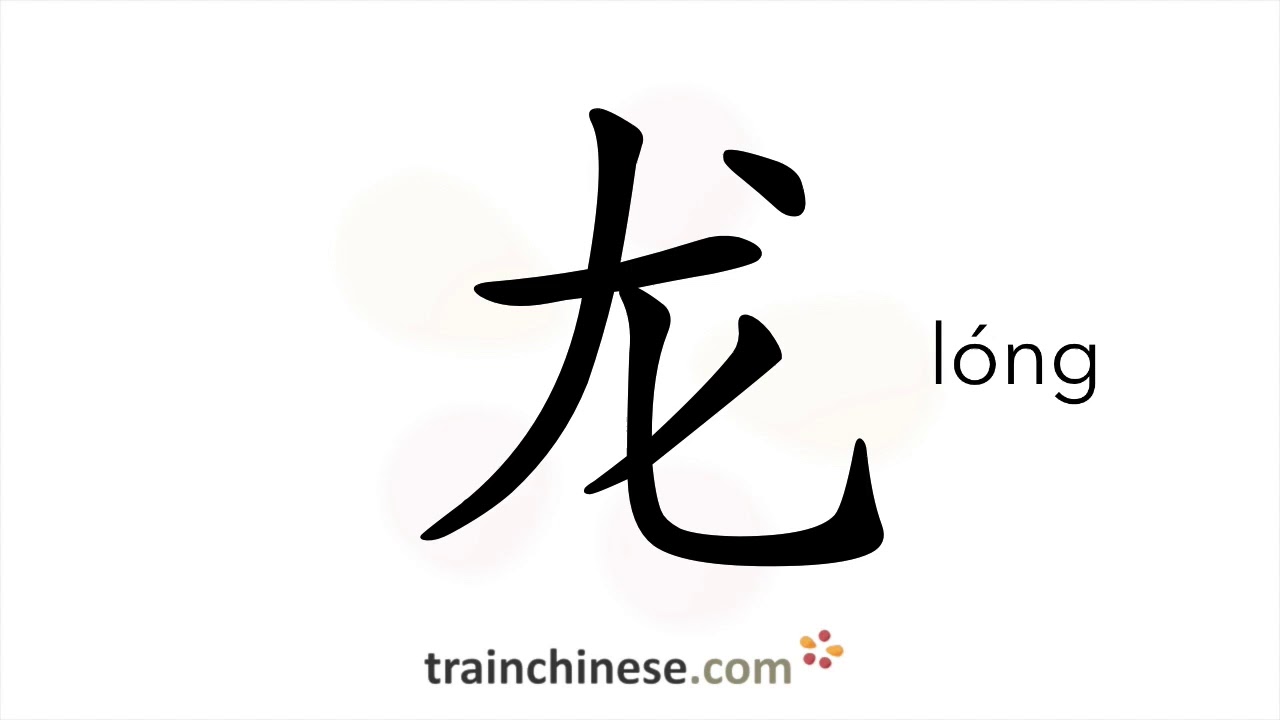
Learning Chinese with a focus on dragons provides a fun and engaging way to connect with the language. Key characters related to the dragon, such as 龙 (lóng), the character for “dragon,” are commonly used in various contexts. Understanding how to read and write these characters helps learners connect with the meaning behind them and unlock the richness of the language.
Dragon: Related Characters and Words
Learning the character 龙 (lóng) opens the door to other related characters and phrases in Chinese. Here are a few examples that expand your vocabulary:
- 龙门 (lóng mén) – Dragon Gate. Refers to a legendary place where a carp transforms into a dragon, symbolizing great success and transformation.
- 龙王 (lóng wáng) – Dragon King. A deity in Chinese mythology who rules over water and storms, often invoked for blessings related to water and rainfall.
- 龙鳞 (lóng lín) – Dragon scales. Refers to the scales of the dragon, used in traditional medicine and art to represent protection and strength.
- 龙头 (lóng tóu) – Dragon head. A term often used to describe the head or leader of a group, representing power and leadership.
Learn authentic Chinese from those who live and breathe the culture.
Specially tailored for kids aged 3-18 around the world!
Get started free!Types of the Chinese Dragon
Chinese dragons are diverse and complex creatures in mythology, each representing different attributes, roles, and powers. These dragons vary in appearance and significance, but they all share a common symbol of power, luck, and nobility. Here are some of the key types of Chinese dragons:
1. Azure Dragon (青龙, qīng lóng):
Significance: The Azure Dragon is one of the Four Symbols of Chinese mythology, representing the East and spring. It is often depicted as a benevolent dragon, guiding people toward good fortune and protection.


Appearance: It is typically shown as a powerful, serpentine creature, often with the ability to control the wind and rain.
Cultural Role: The Azure Dragon is a symbol of strength, protection, and growth, and it is particularly associated with Chinese imperial power.
2. Yellow Dragon (黄龙, huáng lóng):
Significance: The Yellow Dragon is associated with the emperor and imperial authority. It is a symbol of prosperity, good luck, and national power.
Appearance: This dragon is often depicted as yellow or golden, reflecting its connection to the emperor’s supreme position.
Cultural Role: It is sometimes seen as a mythical dragon that can bring rain, ensuring agricultural abundance, and is associated with the Yellow Emperor (黄帝, Huáng Dì), an ancient legendary figure central to Chinese culture.
3. Celestial Dragon (天龙, tiān lóng):
Significance: Celestial Dragons are divine beings that live in the heavens and control the cosmic forces. They are associated with immortality and divine protection.
Appearance: They are typically portrayed as majestic, ethereal creatures with large wings and heavenly attributes.
Cultural Role: In Chinese legends, Celestial Dragons are believed to protect the heavens and assist gods in keeping order in the universe.
4. Horned Dragon (角龙, jiǎo lóng):
Significance: The Horned Dragon represents strength and courage. It is often considered to be a more fierce and combative type of dragon.
Appearance: As the name suggests, the Horned Dragon is depicted with horns protruding from its head, making it a fearsome and imposing figure.
Cultural Role: This dragon is associated with military power, protection, and the defense of the realm.
5. Winged Dragon (翼龙, yì lóng):
Significance: The Winged Dragon is often portrayed as a dragon with large, majestic wings, symbolizing freedom, transcendence, and divine intervention.
Appearance: It typically has a more elongated, serpentine body with large wings that allow it to fly across both earthly and celestial realms.
Cultural Role: Winged Dragons are linked to high spiritual attainment and enlightenment, often appearing in myths that involve celestial beings and gods.
6. Underworld Dragon (冥龙, míng lóng):
Significance: The Underworld Dragon is a mythical creature believed to reside in the realm of the dead or underworld, controlling spirits and death.
Appearance: This dragon is often depicted as dark or shadowy, symbolizing the mysteries of the afterlife.
Cultural Role: While many Chinese dragons are associated with prosperity and good fortune, the Underworld Dragon is a more ominous figure that represents the balance between life and death.
7. Treasure Dragon (宝龙, bǎo lóng):
Significance: The Treasure Dragon is often depicted as guarding hidden treasures or precious resources.
Appearance: It is typically shown with a mouth that holds a pearl (called the flaming pearl, 火珠, huǒ zhū), a symbol of wisdom and enlightenment.
Cultural Role: The Treasure Dragon is believed to protect treasures from evil forces and ensure prosperity and good fortune for its owners.
FAQs
Q1: What is the Chinese name for dragon?
The Chinese name for dragon is 龙 (simplified) or 龍 (traditional), pronounced lóng in Mandarin.
Q2: Is it loong or dragon?
Both “loong” and “dragon” refer to the same mythical creature. However, “loong” is a transliteration of the Chinese word 龙 (lóng), often used in cultural contexts related to Chinese mythology and tradition.
Q3: What is the term for Chinese dragon?
The term for Chinese dragon is 龙 (lóng). In Chinese culture, dragons are highly regarded and symbolize power, good fortune, and strength.
Q4: What is dragon symbol for Chinese?
The dragon symbolizes many things in Chinese culture, including imperial power, good fortune, prosperity, protection, and wisdom. It is considered a benevolent, auspicious creature that brings rain, good harvests, and success.
Learn authentic Chinese from those who live and breathe the culture.
Specially tailored for kids aged 3-18 around the world!
Get started free!

Master’s degree in International Chinese Education from Peking University. Dedicated to the field of Chinese language education, with 7 years of experience as an international Chinese language teacher.