


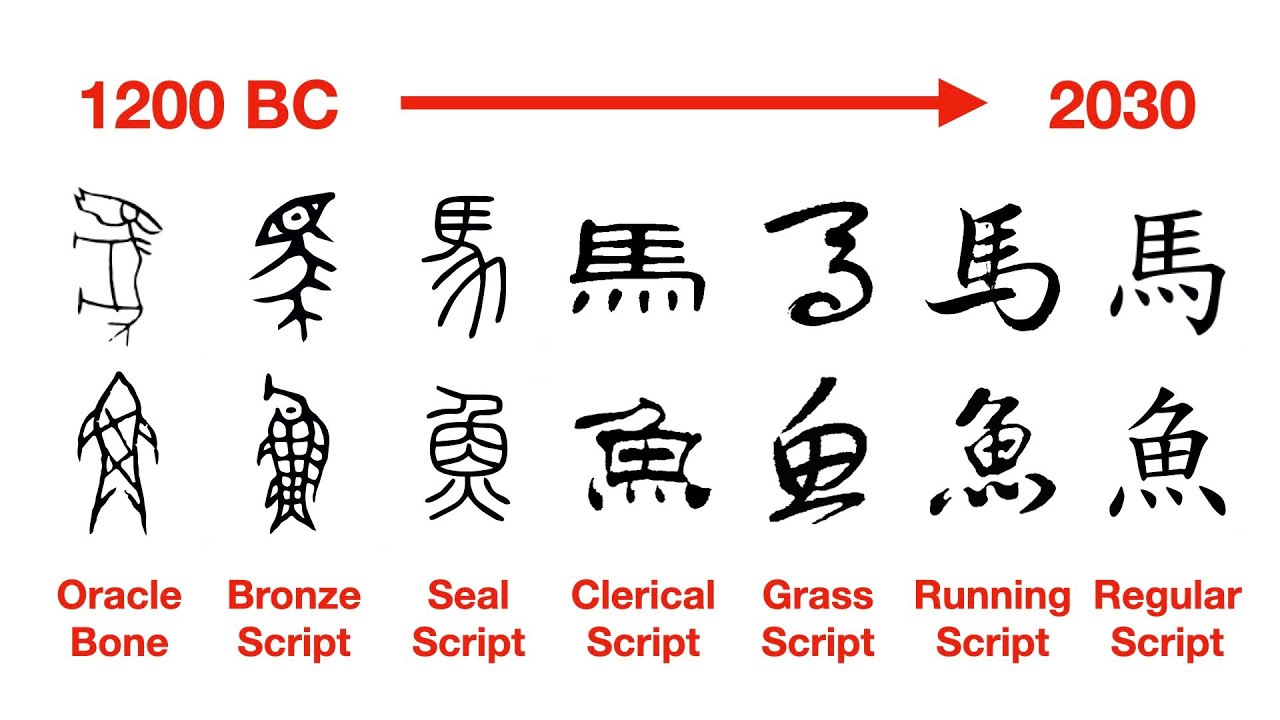
Reading Chinese isn’t about memorizing thousands of random shapes. Most characters are built from a small set of reusable parts — a radical that hints at meaning and, often, a phonetic component that hints at pronunciation. Once you can recognize these building blocks, decoding a new character stops being guesswork and starts being pattern recognition.
This guide walks through exactly how that works, which characters to learn first, and how to move from “recognizing individual characters” to “reading real Chinese text.”
Step 1: Learn Pinyin First
Before touching characters, learn Pinyin — the standard system for writing Mandarin sounds using the Latin alphabet, including the four tones. Pinyin won’t teach you to read characters, but it gives you a way to look up, pronounce, and type any character you learn, which makes every step after this one faster.
Learn authentic Chinese from those who live and breathe the culture.
Specially tailored for kids aged 3-18 around the world!
Get started free!Spend a week or two on Pinyin and tone practice before moving to characters. Trying to learn both at once tends to slow beginners down rather than speed them up.


Is Chinese Read Left to Right?
Yes — in modern mainland China, Singapore, and most everyday contexts (books, websites, signage, subtitles), Chinese is written and read left to right, top to bottom, the same direction as English.


That’s not the only format you’ll encounter, though:
- Traditional vertical layout: Chinese can also be written top to bottom in columns, with columns read right to left. This is still used in some book titles, calligraphy, newspaper mastheads, and formal or artistic contexts, especially in Taiwan and Hong Kong.
- Older signage and right-to-left horizontal text: On some older buildings, temples, or historical signs, you may see horizontal text read right to left — a layout convention that was common before the mid-20th century and still shows up on preserved or traditional-style signage.
- Taiwan and Hong Kong today: Both formats coexist. Newspapers, books, and formal documents often use vertical, right-to-left columns, while digital content, modern books, and everyday web content typically use left-to-right horizontal text, similar to the mainland.
For a beginner, the practical takeaway is simple: assume left to right, top to bottom, unless you’re looking at calligraphy, a book spine, a temple sign, or another clearly traditional/formal context — in which case, check for vertical columns read right to left.
One more orientation note: unlike English, Chinese text doesn’t use spaces between words. A sentence is a continuous string of characters, and readers mentally group them into words based on context and familiarity — which is part of why reading speed improves so much with vocabulary exposure, not just character recognition.
Step 2: Learn to Decode a Character (Not Just Memorize It)
Roughly 80% of common Chinese characters are phono-semantic compounds — they combine two parts:
- A semantic component (often called a radical) that hints at meaning
- A phonetic component that hints at pronunciation
Here’s a real example: 清 (qīng), meaning “clear.”
- The left part, 氵(a compressed form of 水, “water”), is the semantic component — it tells you this character relates to water or liquid.
- The right part, 青 (qīng), is the phonetic component — it tells you roughly how to pronounce the whole character, and it’s shared by other characters like 请 (qǐng, “please”) and 情 (qíng, “feeling”).
This is why learning radicals matters even if you never plan to look words up in a paper dictionary: they turn an unfamiliar character into “oh, that’s probably related to water, and it probably sounds like qīng” instead of a blank shape to memorize from zero.


How to practice this: when you meet a new character, before looking up the meaning, try to (1) spot the radical and guess the general meaning category, and (2) spot any component you recognize from another character and guess the pronunciation. Then check yourself. This single habit does more for long-term retention than flashcard repetition alone.
Step 3: Learn Characters in Order of Frequency — Not Randomly
You don’t need thousands of characters to start reading. Character frequency is extremely skewed: a relatively small set of high-frequency characters covers the large majority of everyday written Chinese, including menus, signs, and simple news headlines.


The most common structured path is the HSK (Hanyu Shuiping Kaoshi) framework, China’s standard Chinese proficiency system. Even if you never plan to take the exam, its six levels give you a ready-made, frequency-ordered character list:
| HSK Level | Approx. New Characters | What You Can Read |
| HSK 1 | ~150 | Basic greetings, numbers, simple signs |
| HSK 2 | ~150 more (~300 total) | Simple daily conversation, basic menus |
| HSK 3 | ~300 more (~600 total) | Short messages, simple articles |
| HSK 4 | ~600 more (~1,200 total) | News headlines, general conversation topics |
| HSK 5–6 | ~1,300 more (~2,500 total) | Newspapers, novels, academic text |


Step 4: Read Graded Readers — Not Native Content — At First
The fastest route from “I recognize characters” to “I can read” is graded readers: books written specifically for learners, using a deliberately limited, controlled set of characters and grammar at each level.
- Look for graded readers pegged to a specific character count (for example, books written using only 150 or 300 known characters) so you can pick one that matches what you’ve actually studied.
- Aim to read at a level where you already understand roughly 95–98% of the text without stopping to look things up. This “mostly understandable, occasionally challenging” zone is where actual reading fluency builds fastest — struggling through text that’s mostly unfamiliar tends to be discouraging and slow.
- Once a level starts feeling easy, move up. Progression should be steady but not rushed.
Alongside graded readers, build small daily reading habits: street signs, menus, subtitles, or a translated app interface. Consistency matters more than volume — 10–15 minutes a day of reading at the right level beats an occasional long session.
Step 5: Practice Writing to Reinforce Reading (Optional but Helpful)
You don’t have to learn to write Chinese by hand to learn to read it, but many learners find that writing characters — even just tracing them — improves character recognition and retention. If you choose to write:
- Learn basic stroke order rules early; they make handwriting legible and make characters easier to look up in stroke-based dictionary tools.
- Practice new characters in the context of words and short sentences rather than in isolation — this mirrors how you’ll actually encounter them while reading.
A Quick Note on Chinese Grammar
Chinese grammar has some real advantages for reading: no verb conjugations, no plural forms, and mostly consistent subject-verb-object word order. That said, things like measure words, the particles 了/在/吗, and negation with 不 vs. 没 take some getting used to. These affect how you parse a sentence once you can already recognize its characters — worth learning alongside your character study, but a separate skill from character decoding itself.


By recognizing these obstacles early on, learners can better prepare themselves, adopt effective strategies, and focus on building a strong foundation. With the right method and learning resources, such as step-by-step guidance, consistent practice, and 1-on-1 tutoring, these challenges can transform into opportunities for growth.
Frequently Asked Questions
How many Chinese characters do I need to know to read?
Around 300–500 high-frequency characters are enough to read simple text like signs and menus. Roughly 1,500–2,000 characters covers basic newspapers and children’s books, and 2,500–3,000+ is typical for general adult literacy.
Is Chinese faster or slower to read than English, once you’re fluent?
For fluent readers, Chinese characters can convey meaning compactly, and some research suggests reading speed is comparable to or faster than English in familiar contexts. For learners, character recognition load makes reading noticeably slower until characters become automatic — which is normal and improves steadily with practice.
How long does it take to learn to read Chinese?
There’s no fixed timeline — it depends on study time and prior language-learning experience. As a rough anchor, the U.S. Foreign Service Institute estimates around 2,200 class hours for English speakers to reach general professional proficiency in Mandarin, with reading and writing typically taking longer than speaking to feel comfortable.
Should I learn simplified or traditional characters?
Simplified characters are standard in mainland China and Singapore; traditional characters are standard in Taiwan, Hong Kong, and Macau. Most beginners choose based on where they plan to use the language — simplified if that’s undecided, since more learning resources currently exist for it.
Is Chinese read left to right or right to left?
Modern Chinese is almost always read left to right, top to bottom — the same direction as English. Right-to-left, top-to-bottom vertical columns still appear in calligraphy, book titles, and some formal or traditional contexts, particularly in Taiwan and Hong Kong, but they’re the exception rather than the default in everyday reading.
Do Chinese children learn to read the same way?
Chinese children typically begin learning characters around age 6 and build up gradually through primary school, often reaching a few thousand recognized characters by the end of elementary school. The underlying skill — recognizing radicals and phonetic components — is the same one adult learners use, just built over more years of exposure.

Learn authentic Chinese from those who live and breathe the culture.
Specially tailored for kids aged 3-18 around the world!
Get started free!

Master’s degree in International Chinese Education from Peking University. Dedicated to the field of Chinese language education, with 7 years of experience as an international Chinese language teacher.