


If you want to test your Mandarin Chinese language skills, then HSK is a great opportunity to try it out. Although HSK 1 is the most basic official Chinese test, passing it is still an achievement worth celebrating.
In this article, we will introduce information related to HSK level 1 vocabulary, such as the new HSK 1 vocabulary list and other information about HSK 1, as well as free HSK 1 vocabulary PDF for you to download. Here is a quick guide to learning essential HSK 1 Chinese vocabulary.


Quick HSK 1 Vocabulary Test Online
The Complete HSK 1 Vocabulary List
The HSK 1 vocabulary list is your go-to resource for learning the most basic Mandarin vocabulary. Below, we have organized the words required for the new HSK Level 1 into a clear and easy-to-understand table. The table includes Chinese characters, pinyin, and English translations, making it perfect for Chinese beginners.
Learn authentic Chinese from those who live and breathe the culture.
Specially tailored for kids aged 3-18 around the world!
Get started free!| No. | Chinese | Pinyin | English |
|---|---|---|---|
| 1 | 爱 | ài | love |
| 2 | 爱好 | ài hào | hobby |
| 3 | 八 | bā | eight |
| 4 | 爸爸 | bàba | dad |
| 5 | 吧 | ba | (interjection particle) |
| 6 | 白 | bái | white |
| 7 | 白天 | bái tiān | day |
| 8 | 百 | bǎi | hundred |
| 9 | 班 | bān | class |
| 10 | 半 | bàn | half |
| 11 | 半年 | bàn nián | half a year |
| 12 | 半天 | bàn tiān | half day |
| 13 | 帮 | bāng | help |
| 14 | 帮忙 | bāng máng | help |
| 15 | 包 | bāo | package |
| 16 | 包子 | bāo zi | bun |
| 17 | 杯 | bēi | cup |
| 18 | 杯子 | bēi zi | cup |
| 19 | 北 | běi | north |
| 20 | 北边 | běi biān | north side |
| 21 | 北京 | běi jīng | Beijing |
| 22 | 本 | běn | (measure word for books or volumes) |
| 23 | 本子 | běn zi | notebook |
| 24 | 比 | bǐ | particle used for comparison |
| 25 | 别 | bié | Don’t |
| 26 | 别的 | bié de | other |
| 27 | 别人 | bié rén | other people |
| 28 | 病 | bìng | disease |
| 29 | 病人 | bìng rén | patient |
| 30 | 不大 | bú dà | not big |
| 31 | 不对 | bú duì | wrong |
| 32 | 不客气 | bú kè qì | You’re welcome |
| 33 | 不用 | bú yòng | No need to |
| 34 | 不 | bù | No |
| 35 | 菜 | cài | dish |
| 36 | 茶 | chá | tea |
| 37 | 差 | chà | differ from; bad; short of |
| 38 | 常 | cháng | often |
| 39 | 常常 | cháng cháng | often |
| 40 | 唱 | chàng | sing |
| 41 | 唱歌 | chàng gē | sing |
| 42 | 车 | chē | car |
| 43 | 车票 | chē piào | ticket |
| 44 | 车上 | chē shàng | in the car |
| 45 | 车站 | chē zhàn | station |
| 46 | 吃 | chī | eat |
| 47 | 吃饭 | chī fàn | have meal |
| 48 | 出 | chū | out |
| 49 | 出来 | chū lái | come |
| 50 | 出去 | chū qù | go out |
| 51 | 穿 | chuān | wear |
| 52 | 床 | chuáng | bed |
| 53 | 次 | cì | (measure word for times, frequency) |
| 54 | 从 | cóng | from |
| 55 | 错 | cuò | wrong |
| 56 | 打 | dǎ | hit, take |
| 57 | 打车 | dǎ chē | take a taxi |
| 58 | 打电话 | dǎ diàn huà | make a phonecall |
| 59 | 打开 | dǎ kāi | turn on |
| 60 | 打球 | dǎ qiú | play ball |
| 61 | 大 | dà | large, big |
| 62 | 大学 | dà xué | university; college |
| 63 | 大学生 | dà xué shēng | university student |
| 64 | 到 | dào | reach |
| 65 | 得到 | dé dào | get |
| 66 | 地 | de | auxiliary word |
| 67 | 的 | de | (aux.) |
| 68 | 等 | děng | wait |
| 69 | 地 | dì | ground |
| 70 | 地点 | dìdiǎn | location |
| 71 | 地方 | dìfang | local |
| 72 | 地上 | dì shàng | on the ground |
| 73 | 地图 | dìtú | Map |
| 74 | 弟弟 | dì di | younger brother |
| 75 | 第(第二) | dì ( dì èr ) | auxiliary word for ordinal numbers (second ) |
| 76 | 点 | diǎn | spot |
| 77 | 电 | diàn | electricity |
| 78 | 电话 | diàn huà | phone |
| 79 | 电脑 | diànnǎo | Computer |
| 80 | 电视 | diànshì | television |
| 81 | 电视机 | diàn shì jī | television |
| 82 | 电影 | diànyǐng | Film |
| 83 | 电影院 | diàn yǐng yuàn | cinema; movie theater |
| 84 | 东 | dōng | east |
| 85 | 东边 | dōng biān | east side |
| 86 | 东西 | dōngxi | thing |
| 87 | 动 | dòng | move |
| 88 | 动作 | dòngzuò | action |
| 89 | 都 | dōu | all |
| 90 | 读 | dú | read |
| 91 | 读书 | dú shū | reading; study |
| 92 | 对 | duì | right |
| 93 | 对不起 | duìbuqǐ | I’m sorry. |
| 94 | 多 | duō | many; much; more |
| 95 | 多少 | duōshao | how much |
| 96 | 饿 | è | hungry |
| 97 | 儿子 | érzi | Son |
| 98 | 二 | èr | Two |
| 99 | 饭 | fàn | rice; meal |
| 100 | 饭店 | fàndiàn | restaurant |
| 101 | 房间 | fángjiān | Room |
| 102 | 房子 | fáng zi | house; building |
| 103 | 放 | fàng | discharge |
| 104 | 放假 | fàng jià | holiday; have a holiday |
| 105 | 放学 | fàng xué | off school |
| 106 | 飞 | fēi | fly |
| 107 | 飞机 | fēijī | aircraft |
| 108 | 非常 | fēicháng | very |
| 109 | 分 | fēn | minute; point; part; (measure word) |
| 110 | 风 | fēng | wind |
| 111 | 干 | gān | dry |
| 112 | 干净 | gānjìng | clean |
| 113 | 干 | gàn | do |
| 114 | 干什么 | gàn shén me | What to do |
| 115 | 高 | gāo | high |
| 116 | 高兴 | gāoxìng | happy |
| 117 | 告诉 | gàosu | tell |
| 118 | 哥哥 | gē ge | elder brother |
| 119 | 歌 | gē | song |
| 120 | 个 | gè | individual |
| 121 | 给 | gěi | give |
| 122 | 跟 | gēn | with |
| 123 | 工人 | gōngrén | worker |
| 124 | 工作 | gōngzuò | work |
| 125 | 关 | guān | shut; close; turn off |
| 126 | 关上 | guān shàng | close;shut to; turn off |
| 127 | 贵 | guì | noble; expansive |
| 128 | 国 | guó | country; state; nation |
| 129 | 国家 | guójiā | Country |
| 130 | 国外 | guó wài | foreign; oversea; abroad |
| 131 | 过 | guò | pass |
| 132 | 还 | hái | also; still; yet |
| 133 | 还是 | háishi | still |
| 134 | 还有 | hái yǒu | also; in addition; besides |
| 135 | 孩子 | háizi | children; kids |
| 136 | 汉语 | hànyǔ | Chinese |
| 137 | 汉字 | hàn zì | Chinese character |
| 138 | 好 | hǎo | good |
| 139 | 好吃 | hǎochī | yummy |
| 140 | 好看 | hǎo kàn | good looking |
| 141 | 好听 | hǎo tīng | pleasant to hear |
| 142 | 好玩儿 | hǎo wánr | fun; interesting |
| 143 | 号 | hào | number; date |
| 144 | 喝 | hē | drink |
| 145 | 和 | hé | and |
| 146 | 很 | hěn | very |
| 147 | 后 | hòu | back; behind; after; later |
| 148 | 后边 | hòu biān | behind; back |
| 149 | 后天 | hòu tiān | day after tomorrow |
| 150 | 花 | huā | flower |
To achieve this first level of Chinese language proficiency, you must master basic pronouns, classifiers, nouns, verbs, and other parts of speech. You must also know how to express time, age, money, and numbers using different sentence patterns such as questions, negatives, imperatives, etc.
Once you are able to understand and use the contents of the form, you have met the basic communication needs and can learn Chinese further.

Tips for Studying HSK 1 Vocabulary Effectively
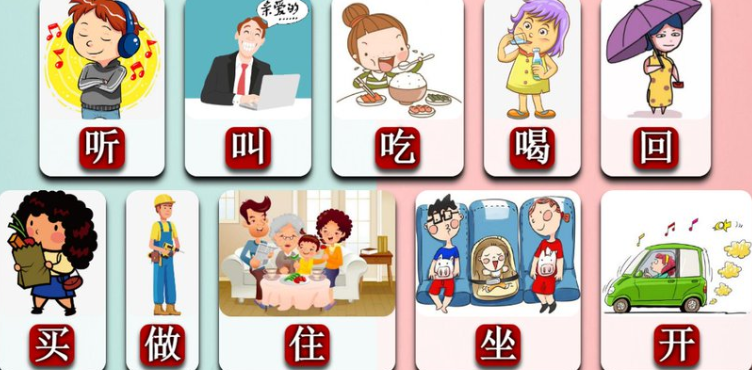
Here are some top tips for getting the most out of your HSK 1 vocabulary study time:
- Learn practical everyday words before academic words
- Say the words out loud when practicing
- Reinforce the meaning of words through pictures, videos, and translations
- Monitoring progress through practice tests
Different Types of HSK 1 Vocabulary List
The HSK 1 vocabulary list included in this blog covers 150 essential words, which are the most basic and fundamental for beginners. These words include pronouns, classifiers, nouns, verbs, adjectives, and other parts of speech, forming the core of basic Chinese communication. Mastering these 150 words lays a solid foundation for everyday conversations and passing the HSK 1 exam. Below we have categorized the HSK1 vocabulary lists for your quick reference.
HSK 1 Adjectives
| Chinese | Pinyin | English |
| 大 | dà | big |
| 多 | duō | many |
| 高兴 | gāoxìng | happy |
| 好 | hǎo | good |
| 冷 | lěng | cold |
| 漂亮 | piàoliang | pretty |
| 热 | rè | hot |
| 少 | shǎo | few |
| 小 | xiǎo | small |
HSK 1 Adverbs
| Chinese | Pinyin | English |
| 不 | bù | no, not |
| 没有 | méiyǒu | did not |
| 很 | hěn | very |
| 太 | tài | too |
| 都 | dōu | all |
HSK 1 Auxiliary Verbs
| Chinese | Pinyin | English |
| 会 | huì | can, know to |
| 能 | néng | can, be able to |
| 想 | xiǎng | would like to |
HSK 1 Demonstrative Pron.
| Chinese | Pinyin | English |
| 这 | zhè | this |
| 那 | nà | that |
HSK 1 Interrogative Pron.
| Chinese | Pinyin | English |
| 多少 | duōshǎo | how much |
| 几 | jǐ | how many, a few |
| 哪 | nǎ | which |
| 哪儿 | nǎr | where |
| 什么 | shénme | what, why |
| 谁 | shéi | who |
| 怎么 | zěnme | how |
| 怎么样 | zěnmeyàng | how about |
HSK 1 Measure Words
| Chinese | Pinyin | English |
| 本 | běn | [measure word for books] |
| 个 | gè | [measure word for people] |
| 块 | kuài | [measure word for pieces] |
| 岁 | suì | years old |
| 些 | xiē | some |
| 一点儿 | yīdiǎnr | a little |
HSK 1 Nouns
| Chinese | Pinyin | English |
| 爸爸 | bàba | father; dad |
| 北京 | Běijīng | Beijing |
| 杯子 | bēizi | cup |
| 菜 | cài | vegetable |
| 茶 | chá | tea |
| 出租车 | chūzūchē | taxi |
| 点 | diǎn | point, dot, spot |
| 电脑 | diànnǎo | computer |
| 电视 | diànshì | television |
| 电影 | diànyǐng | movie |
| 东西 | dōngxi | thing |
| 儿子 | érzi | son |
| 饭店 | fàndiàn | restaurant |
| 飞机 | fēijī | airplane |
| 分钟 | fēnzhōng | minute |
| 狗 | gǒu | dog |
| 汉语 | hànyǔ | mandarin Chinese |
| 后面 | hòumiàn | behind |
| 家 | jiā | home |
| 今天 | jīntiān | today |
| 老师 | lǎoshī | teacher |
| 里面 | lǐmiàn | inside |
| 妈妈 | māma | mother; mom |
| 猫 | māo | cat |
| 米饭 | mǐfàn | rice |
| 明天 | míngtiān | tomorrow |
| 名字 | míngzi | name |
| 年 | nián | year |
| 女儿 | nǚ ér | daughter |
| 朋友 | péngyou | friend |
| 苹果 | píngguǒ | apple |
| 钱 | qián | money |
| 前面 | qiánmiàn | front |
| 人 | rén | person |
| 上 | shàng | up |
| 商店 | shāngdiàn | store |
| 上午 | shàngwǔ | morning |
| 时候 | shíhou | time |
| 书 | shū | book |
| 水 | shuǐ | water |
| 水果 | shuǐguǒ | fruit |
| 天气 | tiānqì | weather |
| 同学 | tóngxué | shoolmate |
| 下 | xià | down |
| 先生 | xiānsheng | sir |
| 现在 | xiànzài | now |
| 小姐 | xiǎojiě | Miss |
| 下午 | xiàwǔ | afternoon |
| 星期 | xīngqī | week |
| 学生 | xuéshēng | student |
| 学校 | xuéxiào | school |
| 衣服 | yīfu | cloth |
| 医生 | yīshēng | doctor |
| 医院 | yīyuàn | hospital |
| 椅子 | yǐzi | chair |
| 月 | yuè | month |
| 中国 | Zhōngguó | China |
| 中午 | zhōngwǔ | noon |
| 桌子 | zhuōzi | desk |
| 字 | zì | character |
| 昨天 | zuótiān | yesterday |
HSK 1 Numerals
| Chinese | Pinyin | English |
| 一 | yī | one |
| 二 | èr | two |
| 三 | sān | three |
| 四 | sì | four |
| 五 | wǔ | five |
| 六 | liù | six |
| 七 | qī | seven |
| 八 | bā | eight |
| 九 | jiǔ | nine |
| 十 | shí | ten |
| 号 | hào | [day number in a date], number (in a series) |
HSK 1 Verbs
| Chinese | Pinyin | English |
| 爱 | ài | to love |
| 吃 | chī | to eat |
| 读 | dú | to read |
| 工作 | gōngzuò | to work |
| 喝 | hē | to drink |
| 回 | huí | to return |
| 叫 | jiào | to call, to be called |
| 开 | kāi | to open |
| 看 | kàn | to look (at) |
| 看见 | kànjiàn | to see |
| 来 | lái | to come |
| 没有 | méiyǒu | to not have |
| 买 | mǎi | to buy |
| 请 | qǐng | please |
| 去 | qù | to go |
| 认识 | rènshi | to be familiar with |
| 是 | shì | to be (am, is, are) |
| 睡觉 | shuìjiào | to sleep |
| 说 | shuō | to say. to speak |
| 听 | tīng | to listen (to) |
| 下雨 | xiàyǔ | to rain |
| 写 | xiě | to write |
| 谢谢 | xièxie | thank you; to thank |
| 喜欢 | xǐhuān | to like |
| 学习 | xuéxí | to study |
| 有 | yǒu | to have |
| 再见 | zàijiàn | good-bye |
| 住 | zhù | to live (in/at) |
| 做 | zuò | to do |
| 坐 | zuò | to sit |
HSK 1 Personal Pronouns
| Chinese | Pinyin | English |
| 你 | nǐ | you |
| 他 | tā | he, him |
| 她 | tā | she, her |
| 我 | wǒ | I, me |
| 我们 | wǒmen | we, us |
HSK 1 Particles
| Chinese | Pinyin | English |
| 的 | de | [structural particle] |
| 了 | le | [aspectual particle] |
| 吗 | ma | [question particle] |
| 呢 | ne | [question particle] |
The Best Way to Memorize HSK 1 Vocabulary
Now that you have seen the HSK 1 vocabulary list, you know what you should be learning. But what is the best way to memorize these words?
The best way to memorize HSK 1 vocabulary (or any other level of vocabulary for that matter) is to use flashcards and ‘touch’ new vocabulary as much as you can in real life, allowing words to naturally move from short-term to long-term memory.
Step 1. Select and create a vocabulary list
Although we have prepared HSK 1 vocabulary lists for you, you will need to create your to remember the words.
Firstly, browse through our vocabulary lists, then write down any words you don’t know in your notebook, and select and create your own vocabulary lists from these. Make them your Chinese vocabulary.
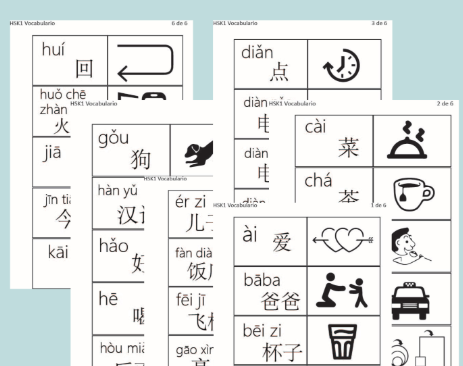
Step 2. Use Flashcards
Flashcards are a powerful way to review Chinese words. The very process of making flashcards exposes you to more unfamiliar vocabulary.
If you don’t have as much time as you’d like, then you can use flashcard apps like Anki. It is convenient for you to use your fragmented time to review new words.

Step 3. Get Out There and Try New Words
To use these words accurately and convincingly, pass the HSK 1 exam, and speak Chinese, you will need to be exposed to many more words!
Practicing with a native Chinese speaker will do the trick. If you can’t find someone to practice with, you can also look up words and read example sentences in some dictionary apps or websites. These sentences will give you more exposure to the words in context.
FAQs
You will not encounter all 150 required words in one test, which means you can take your chances. However, these 150 words are the most basic and important words you need to speak Chinese. You should master them anyway, and build your vocabulary on them.
In the HSK 1 exam, all questions are provided in a “true or false” and “multiple choice” format. In addition, all questions on the test paper are accompanied by Pinyin and Chinese characters.
Nonetheless, it is still a good idea to master basic Chinese character writing as early as possible. This will help you memorize vocabulary better and read Chinese texts more easily.
In the version HSK 2.0, HSK Level 1 requires exactly 150 words.
In the version HSK 3.0, HSK Level 1 requires 500 words.
Conclusion
Mastering the vocabulary of HSK1 will be a good start for you to begin learning Mandarin. This basic vocabulary lays the foundation for basic communication in Chinese. By focusing on this easy-to-follow vocabulary list, you will build the confidence and skills you need to further your learning of Chinese.
If you are interested in other levels of HSK exams and learning Chinese, WuKong Chinese has a wealth of quality resources for you to explore!
Learn authentic Chinese from those who live and breathe the culture.
Specially tailored for kids aged 3-18 around the world!
Get started free!

Bella holds a Master’s degree from Yangzhou University and brings 10 years of extensive experience in K-12 Chinese language teaching and research. A published scholar, she has contributed over 10 papers to the field of language and literature. Currently, Bella leads the research and development of WuKong Chinese core courses, where she prioritizes academic rigor alongside student engagement and cognitive development. She is dedicated to building a robust foundation for young learners covering phonetics (Pinyin), characters, idioms, and classical culture while ensuring that advanced courses empower students with comprehensive linguistic mastery and cultural insight.