


Snow is one of the most beautiful and poetic weather words in Chinese.From the simple character 雪 (xuě) to famous idioms, poems, and winter traditions, snow appears everywhere in Chinese language and culture.
In this complete guide, we’ll break down everything you need to master snow in Chinese: the core character with correct pronunciation and writing, essential snow-related vocabulary for everyday use, classic Chinese idioms and poems, fascinating cultural insights about snow in Chinese history.

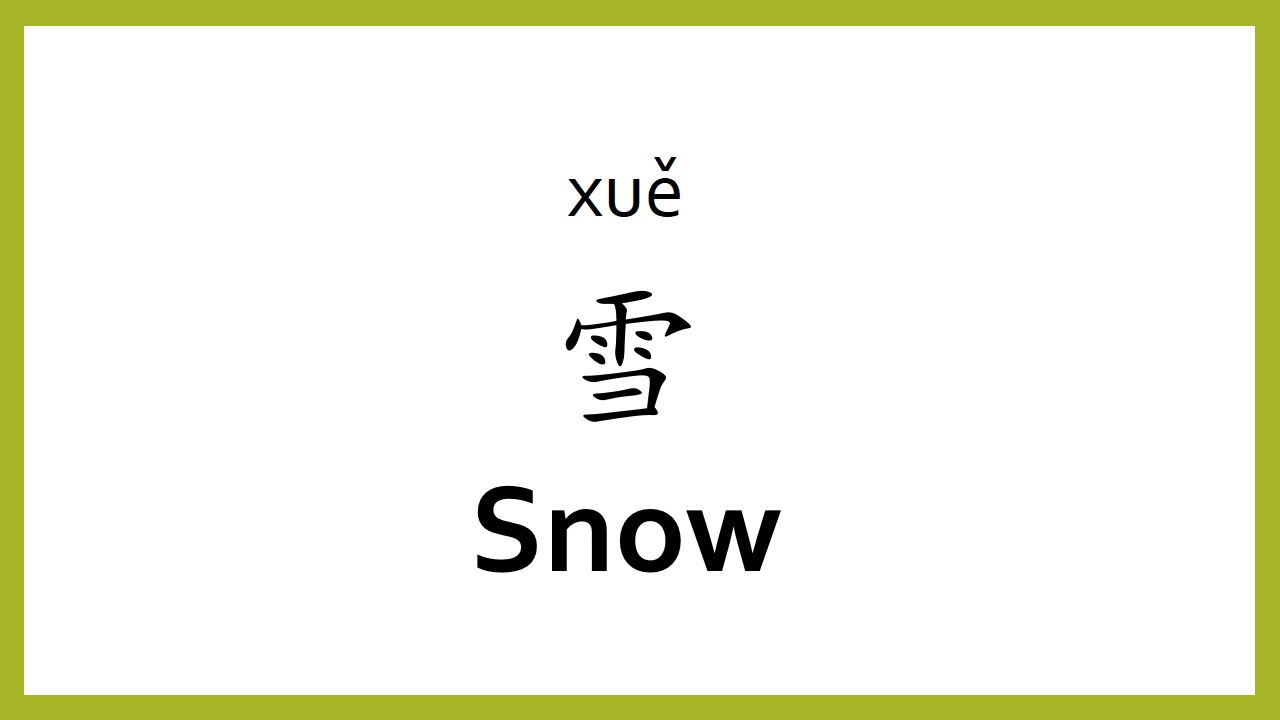
How to Say Snow In Chinese
雪 (xuě)
- Pronunciation tip:
- 雪 is pronounced with a clear 3rd tone (fall then rise). Say it like “shweh” with your voice dipping low then rising slightly.
- How to Write:
- The top part is the 雨 radical (yǔ), which appears in all weather-related characters (rain, thunder, fog, etc.)
- The bottom part 彐 is a phonetic component that hints at the pronunciation
- Basic Usage:
- As a noun: 雪 = snow
- As a verb phrase: 下雪 (xià xuě) = to snow (literally “fall snow”)
Essential Snow Vocabulary & Everyday Phrases
Below is a complete table of all the most common snow-related words and phrases you’ll use in daily conversations, with pinyin, English meaning, and simple example sentences:
Learn authentic Chinese from those who live and breathe the culture.
Specially tailored for kids aged 3-18 around the world!
Get started free!Basic Snow Words
| Chinese Characters | Hanyu Pinyin | English Meaning | Simple Example Sentence |
|---|---|---|---|
| 雪 | xuě | snow | 外面有很多雪。(Wàimiàn yǒu hěn duō xuě. = There’s a lot of snow outside.) |
| 下雪 | xià xuě | to snow | 今天下雪了。(Jīntiān xià xuě le. = It snowed today.) |
| 雪花 | xuě huā | snowflake | 雪花好漂亮啊!(Xuě huā hǎo piàoliang a! = The snowflakes are so beautiful!) |
| 雪人 | xuě rén | snowman | 我们一起堆雪人吧。(Wǒmen yīqǐ duī xuě rén ba. = Let’s build a snowman together.) |
| 雪球 | xuě qiú | snowball | 孩子们在扔雪球。(Háizimen zài rēng xuě qiú. = The kids are throwing snowballs.) |
Winter Activities
| Chinese Characters | Hanyu Pinyin | English Meaning | Simple Example Sentence |
|---|---|---|---|
| 打雪仗 | dǎ xuě zhàng | to have a snowball fight | 下雪天最适合打雪仗了。(Xià xuě tiān zuì shìhé dǎ xuě zhàng le. = Snow days are perfect for snowball fights.) |
| 滑雪 | huá xuě | to ski | 我冬天喜欢去滑雪。(Wǒ dōngtiān xǐhuān qù huá xuě. = I like to go skiing in winter.) |
Weather & Snow Conditions
| Chinese Characters | Hanyu Pinyin | English Meaning | Simple Example Sentence |
|---|---|---|---|
| 小雪 | xiǎo xuě | light snow | 今天下了点小雪。(Jīntiān xià le diǎn xiǎo xuě. = There was a little light snow today.) |
| 大雪 | dà xuě | heavy snow | 昨天下了一夜大雪。(Zuótiān xià le yī yè dà xuě. = It snowed heavily all night yesterday.) |
| 暴风雪 | bào fēng xuě | blizzard | 暴风雪来了,不要出门。(Bào fēng xuě lái le, bùyào chūmén. = A blizzard is coming, don’t go outside.) |
| 雨夹雪 | yǔ jiā xuě | sleet / rain and snow | 今天是雨夹雪的天气。(Jīntiān shì yǔ jiā xuě de tiānqì. = It’s sleeting today.) |
| 积雪 | jī xuě | accumulated snow | 路上的积雪很厚。(Lùshang de jī xuě hěn hòu. = The accumulated snow on the road is very thick.) |
Chinese Idioms and Poetry Related to Snow
Snow has inspired countless Chinese idioms and poems that are widely used today. These expressions add depth and beauty to your Chinese, and understanding them will help you connect more deeply with native speakers.
Classic Chinese Snow Idioms
These idioms appear in both daily conversations and written Chinese:
- 雪中送炭 (xuě zhōng sòng tàn)
- Meaning: To provide timely help when someone is in great need (literally “to send charcoal in the snow”)
- Example: 谢谢你在我没钱交房租的时候雪中送炭。(Thank you for your timely help when I couldn’t pay the rent.)
- 雪上加霜 (xuě shàng jiā shuāng)
- Meaning: To make a bad situation even worse (literally “to add frost on top of snow”)
- Example: 他刚丢了手机,又感冒了,真是雪上加霜。(He just lost his phone, then got a cold — it just made things worse.)
- 瑞雪兆丰年 (ruì xuě zhào fēng nián)
- Meaning: Auspicious snow foretells a bumper harvest; a heavy snowfall means good luck and prosperity for the coming year
- Example: 今年冬天雪下得这么大,瑞雪兆丰年,明年一定是个好年。(We had so much snow this winter — auspicious snow foretells a good harvest, next year will be great.)
- 阳春白雪 (yáng chūn bái xuě)
- Meaning: Refers to highbrow, elegant art or literature that is not popular with the masses (originally the name of an ancient classical music piece)
- Example: 这幅画太抽象了,有点阳春白雪,普通人看不懂。(This painting is too abstract, it’s a bit highbrow, ordinary people can’t understand it.)
Famous Chinese Snow Poems
These poems are memorized by every Chinese child, and their lines are quoted constantly in daily life:
- 《江雪》(River Snow) by Liu Zongyuan (Tang Dynasty)
- 千山鸟飞绝,万径人踪灭。孤舟蓑笠翁,独钓寒江雪。
- Pinyin: Qiān shān niǎo fēi jué, wàn jìng rén zōng miè. Gū zhōu suō lì wēng, dú diào hán jiāng xuě.
- Meaning: A thousand mountains, no birds fly; ten thousand paths, no human tracks. A lone boat, an old man in straw hat and cloak, fishing alone in the cold river snow.
- 《问刘十九》(To Liu the Nineteenth) by Bai Juyi (Tang Dynasty)
- 晚来天欲雪,能饮一杯无?
- Pinyin: Wǎn lái tiān yù xuě, néng yǐn yī bēi wú?
- Meaning: Evening is coming, the sky looks like it will snow — will you share a cup of wine with me?
Culture Insight: Snow in Chinese Culture
Snow holds a special place in Chinese culture, with thousands of years of history in festivals and traditional beliefs. Understanding this cultural context will help you connect more deeply with Chinese speakers and appreciate the beauty of the language.
Snow in the 24 Solar Terms
The traditional Chinese lunisolar calendar includes 24 solar terms that guide agricultural activities and seasonal changes. Two of these terms are directly related to snow:
- 小雪 (Xiǎo Xuě / Light Snow): Falls around November 22nd, marking the start of light snowfall in northern China
- 大雪 (Dà Xuě / Heavy Snow): Falls around December 7th, when snowfall becomes heavier and starts to accumulate on the ground
These terms are still widely used today in weather reports and daily conversations across China.
The Symbolism of Snow in Chinese Culture
Snow carries three core symbolic meanings in Chinese culture:
- Purity and innocence: Snow is white and clean, so it is often used to represent pure hearts and untainted character.
- Perseverance and resilience: Plants that bloom in the snow (like plum blossoms) are symbols of strength and courage in the face of hardship.
- Good fortune and prosperity: The idiom 瑞雪兆丰年 (auspicious snow foretells a bumper harvest) has been passed down for thousands of years, making snow a symbol of good luck and abundance.
FAQs about Snow in Chinese
A: The Chinese name for snow is 雪 (xuě). It’s made up of the rain radical (雨) on top, which tells you it’s a weather word, and the phonetic component 彐 on the bottom.
A: “Little snow” or “light snow” in Chinese is 小雪 (xiǎo xuě). It is also the name of one of the 24 traditional Chinese solar terms, falling around November 22nd each year, marking the start of light snowfall in northern China.
A: “Snowflake” in Chinese is 雪花 (xuě huā), which literally translates to “snow flower”. This beautiful, poetic name reflects the delicate, flower-like shape of snowflakes and is widely used in both daily speech and Chinese literature.
A: “Snowman” is 雪人 (xuě rén) and “to build a snowman” is 堆雪人 (duī xuě rén). “Snowball fight” is 打雪仗 (dǎ xuě zhàng) — this is the only correct phrase, never say “打雪球”.
Conclusion
Learning snow in Chinese is one of the most rewarding winter topics for beginner learners. The core character 雪 is simple to learn and write, and the related vocabulary follows logical patterns that are easy to remember. Beyond basic words, mastering the classic idioms and famous poems about snow will not only improve your Chinese, but also give you a deeper understanding of Chinese culture and history.
If you want to help your child build fluent, confident Mandarin skills for everyday life, WuKong Chinese is here to guide you. Our engaging online courses for kids and teens aged 3–18 integrate practical vocabulary, conversational practice, and immersive cultural learning into every lesson. Start your child’s Mandarin journey today with a free 1-on-1 trial class.
Learn authentic Chinese from those who live and breathe the culture.
Specially tailored for kids aged 3-18 around the world!
Get started free!

Bella holds a Master’s degree from Yangzhou University and brings 10 years of extensive experience in K-12 Chinese language teaching and research. A published scholar, she has contributed over 10 papers to the field of language and literature. Currently, Bella leads the research and development of WuKong Chinese core courses, where she prioritizes academic rigor alongside student engagement and cognitive development. She is dedicated to building a robust foundation for young learners covering phonetics (Pinyin), characters, idioms, and classical culture while ensuring that advanced courses empower students with comprehensive linguistic mastery and cultural insight.