汉字学习
基础入门
Chinese Characters for Beginners
汉字不是字母,也不是图画。先理解结构,再反复练习,你会记得更牢。
Chinese characters are not letters
中文使用汉字,而不是字母。一个汉字通常表示一个音节和一个意思。比如“水”读作 shuǐ,意思是 water。汉字不能像英语单词那样拆成字母来读,所以学习汉字时,要同时记住字形、读音和意思。
Chinese uses characters, not letters. One character usually represents one syllable and one meaning. For example, “水” is pronounced shuǐ and means “water.” You cannot read a character by splitting it into letters, so when learning a character, you need to remember its shape, its sound, and its meaning together.
Start with basic strokes
汉字由笔画组成。常见的基本笔画有:横、竖、撇、点、折。很多复杂汉字也是由这些基本笔画组合而成的。先练习基本笔画,再写整字,会更容易。
Chinese characters are made of strokes. Common basic strokes include horizontal, vertical, left-falling, dot, and turning strokes. Many complex characters are built from these basic strokes. Practice the basic strokes first, then write whole characters — it will be much easier.
- 横
- 竖
- 撇
- 点
- 折
Learn the stroke order rules
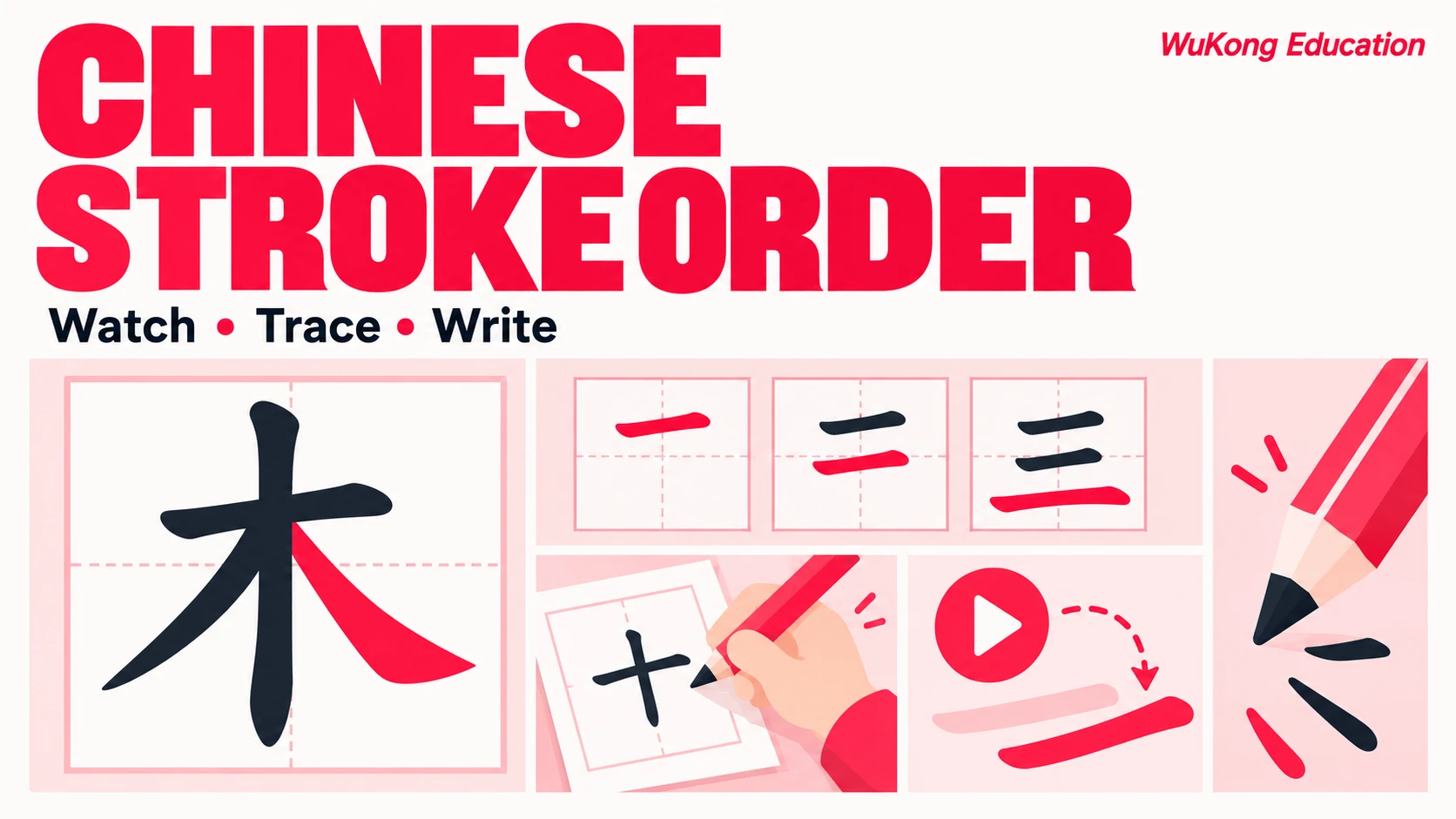
写汉字有固定顺序。一般规则是:从上到下,从左到右,先横后竖,先撇后点,先外后内。按正确笔顺写,字会更整齐,也更容易记住。
Chinese characters have a fixed writing order. General rules: top to bottom, left to right, horizontal before vertical, left-falling before dot, outside before inside. Writing in the correct stroke order makes your characters neater and easier to remember.
- 从上到下
- 从左到右
- 先横后竖
- 先撇后点
- 先外后内
Break characters into components
很多汉字不是一团乱线,而是由更小的“部件”组成的。比如“好”由“女”和“子”组成,“明”由“日”和“月”组成。学会常见部件,就能更快记住新字。
Many characters are not random lines — they are made of smaller components. For example, “好” is made of “女” and “子”; “明” is made of “日” and “月.” If you learn common components, you can remember new characters faster.
Recognize radicals and meaning
汉字中常有一个部分提示意思,叫“偏旁”。比如“氵”通常和水有关:河、海、洗;“扌”通常和手有关:打、拿、推。看到偏旁,可以猜到这个字大概和什么有关。
A character often has a part that hints at its meaning, called a “radical.” For example, “氵” is usually related to water: 河、海、洗. “扌” is usually related to hands: 打、拿、推. When you see a radical, you can guess what the character is about.
- 氵河 · 海 · 洗
- 扌打 · 拿 · 推
Notice the structure
汉字常见结构有:左右结构(如“你”)、上下结构(如“字”)、包围结构(如“国”)。先看整体结构,再记局部部件,比一笔一笔死记更有效。
Common character structures include: left-right (e.g., “你”), top-bottom (e.g., “字”), and enclosure (e.g., “国”). Looking at the overall structure first, then the components, is more effective than memorizing stroke by stroke.
- 左右你
- 上下字
- 包围国
Phonetic-semantic characters: one part for sound, one for meaning
很多汉字是“形声字”:一部分提示意思,另一部分提示读音。比如“妈”中,“女”提示和女性有关,“马”提示读音 mǎ。了解这个规律,可以帮助你猜读音和意思,但不要完全依赖,因为读音会变化。
Many characters are “phonetic-semantic” characters: one part hints at meaning, another hints at pronunciation. For example, in “妈,” “女” suggests a female meaning, and “马” suggests the sound mǎ. This pattern helps you guess sound and meaning, but don’t rely on it completely, because pronunciations change.
Learning tips
- 每天学 5–10 个新字,不要一次记太多。Learn 5–10 new characters a day. Don’t try to memorize too many at once.
- 先认读,再书写;先常用字,再复杂字。Recognize and read first, then write; learn common characters first, then complex ones.
- 把字放在词语和句子里记,比如“喝水”“吃饭”,不要只记单个字。Learn characters in words and sentences, such as “喝水” and “吃饭,” not just as single characters.
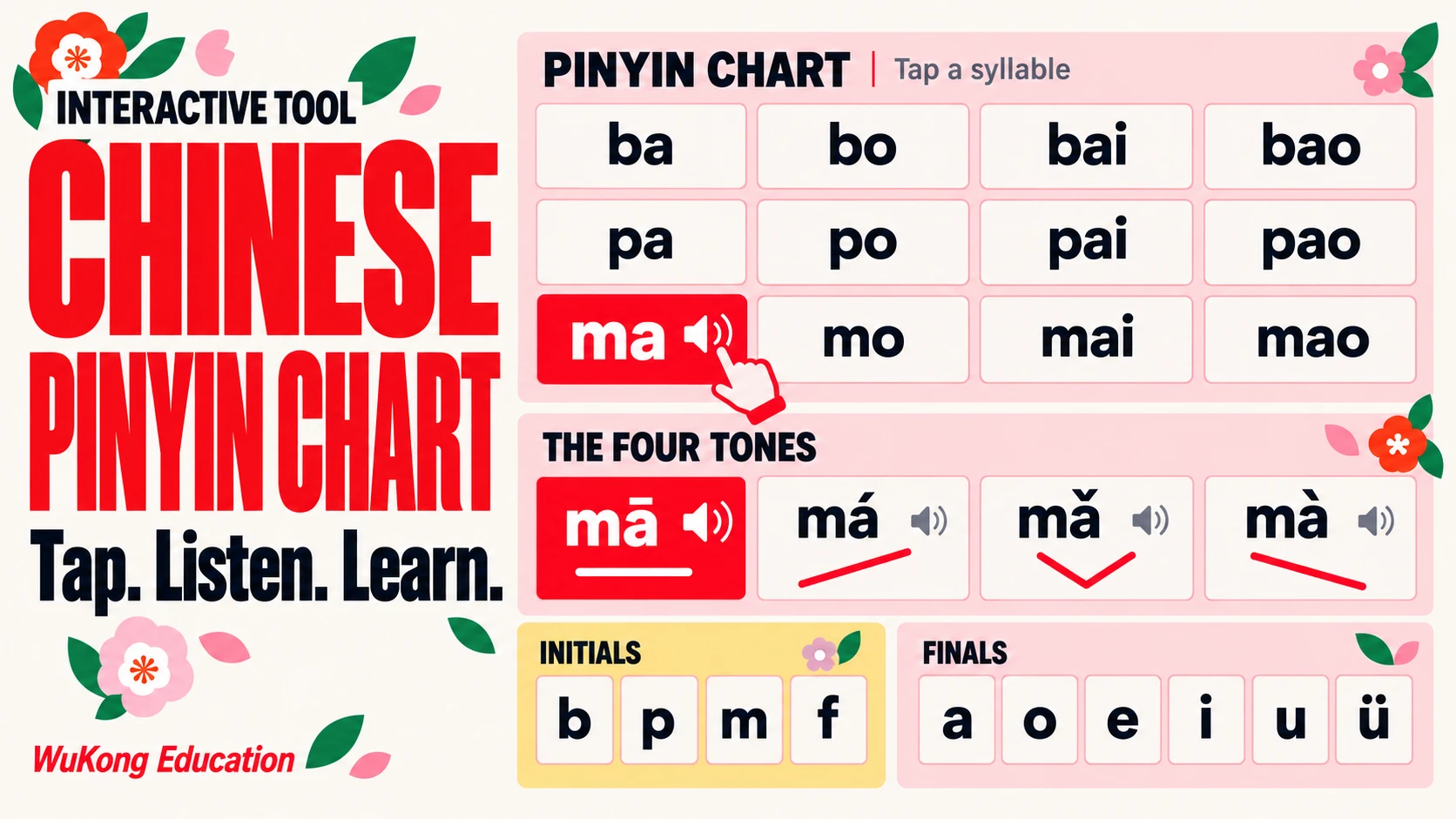
- 用笔顺工具看怎么写,用拼音工具听怎么读,然后自己动手写一遍。Use a stroke order tool to see how to write, use a pinyin tool to hear how to read, then write it yourself.
- 复习比一次学很多更重要。第二天、第三天再回来看一遍。Review is more important than learning a lot at once. Come back to the characters on the second and third day.
One simple principle
先理解汉字的结构,再反复练习。不要只把汉字当成图画来抄。知道它由什么组成、为什么这样写,你会记得更牢。
Understand the structure first, then practice repeatedly. Don’t just copy characters as pictures. If you know what they are made of and why they are written that way, you will remember them much better.
免费在线
字帖生成器
基础汉字学习
HSK 1-3
HSK 1–3 Character & Word Cards
Filter by level · Tap 🔈 to hear the pronunciation · Each card shows pinyin, meaning, and real collocations
更多 中文学习工具
汉字笔顺工具