

7 Ways to Say Friendship in Mandarin Chinese (With Pinyin)


In this article, WuKong Education will explore the different ways to say “friendship” in Chinese, its cultural significance, and how it is expressed through language. Learning about friendship in Chinese not only expands our linguistic knowledge but also deepens our understanding of the culture and people. So let’s dive into the fascinating world of friendship in Chinese!

7 Ways to Say Friendship in Chinese (With Pinyin)
Friendship in Chinese is “友谊” (yǒu yì). However, there are several other ways to express this concept in Chinese. Let’s take a look at some of them:
1) 朋友 (Péng yǒu)
This term is widely used in everyday conversations to refer to both acquaintances and close friends.
2) 知己 (Zhī jǐ)
This term is often used to describe someone who knows you well, like your best friend or soulmate.
3) 情谊 (Qíng yì)
This term emphasizes the strong emotional connection in a friendship.
4) 友爱 (Yǒu ài)
This term highlights the love and care between friends. It is a combination of 友 (yǒu) meaning friend, and 爱 (ài) meaning love. This term conveys the idea of friendship being built on a foundation of love and affection.
5) 同窗 (Tóng chuāng)
同 (tóng) means together, and 窗 (chuāng) means window, together it translates to “classmate.” This term emphasizes the bond between friends who have studied or shared a classroom together.
6) 好友 (Hǎo yǒu)
It is a combination of 好 (hǎo) meaning good, and 友 (yǒu) meaning friend. This term implies a deeper level of friendship and trust between individuals.
7) 心腹 (Xīn fù)
This term translates to “close confidant.” This term emphasizes the trust, loyalty, and closeness in a friendship.
Common Chinese Idioms for Friendship
| Idiom (Hanzi) | Pinyin | English Translation/Meaning |
| 志同道合 | zhì tóng dào hé | To share the same ambitions and follow the same path. |
| 情同手足 | qíng tóng shǒu zú | As close as brothers (literally “as close as hands and feet”). |
| 形影不离 | xíng yǐng bù lí | Inseparable as a body and its shadow. |
| 患难与共 | huàn nàn yǔ gòng | To share trials and tribulations together. |
| 生死之交 | shēng sǐ zhī jiāo | A friendship ready to face life and death together. |
| 肝胆相照 | gān dǎn xiāng zhào | To treat each other with total sincerity (literally “showing each other liver and gallbladder”). |
| 莫逆之交 | mò nì zhī jiāo | A friendship where there is no disagreement; complete soulmates. |
| 相见恨晚 | xiāng jiàn hèn wǎn | To regret meeting so late (feeling like you should have been friends long ago). |
| 高山流水 | gāo shān liú shuǐ | Deep appreciation for a “soulmate” or a true connoisseur of one’s talents. |
| 万古长青 | wàn gǔ cháng qīng | Eternal and evergreen (used to wish for a friendship that lasts forever). |
| 金兰之好 | jīn lán zhī hǎo | A bond as strong as metal and as fragrant as orchids (often used for sworn siblings). |
| 一见如故 | yī jiàn rú gù | To feel like old friends at the first meeting. |
How to Pronounce Friendship in Chinese Mandarin?
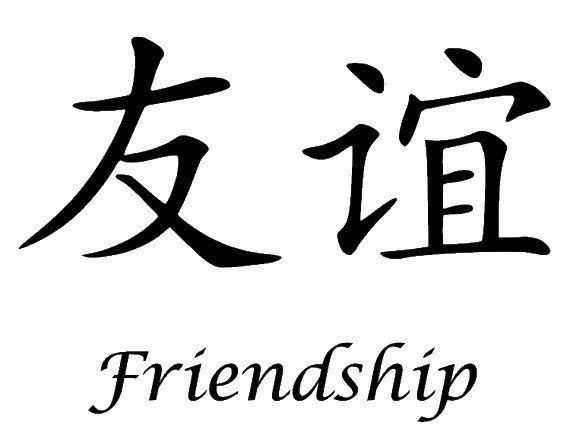
The most common term for friendship in Chinese is “友谊” (yǒu yì), which is pronounced as “yo-ee.”
Other terms like 朋友 (péng yǒu) and 知己 (zhī jǐ) are pronounced as “puh-ng yo” and “dr-jee” respectively.
Learn authentic Chinese from those who live and breathe the culture.
Specially tailored for kids aged 3-18 around the world!
Get started free!Part 3: How to Say Friendship in Cantonese Chinese?
Cantonese Chinese is one of the many dialects within the Chinese language and is primarily spoken in southern China, Hong Kong, and Macau. Friendship holds great significance in Cantonese culture as well, and there are various ways to express it in this dialect. The most common term for friendship in Cantonese is “友誼” (jau5 ji4).
Other ways to say friendship in Cantonese include 朋友 (pang4 jau5), 知己 (zi1 gei3), 情意 (ceng4 ji3), 友愛 (jau5 oi3), and 才子 (coi4 zi2). Each term carries its own nuances and connotations, emphasizing different aspects of friendship. Learning these variations not only expands our vocabulary but also teaches us about the cultural significance of friendship in Cantonese Chinese.
Part 4: How to Write Friendship in Chinese?
Friendship is a deeply valued concept in Chinese culture, and it holds its own unique expressions in the Chinese language. While the most common term for friendship is “友谊” (yǒu yì), there are other ways to write it, each carrying its nuances and connotations. For instance, 朋友 (péng yǒu) is the commonly used term for friend, while 知己 (zhī jǐ) highlights a deep understanding between friends.
情谊 (qíng yì) emphasizes the emotional bond, and 友爱 (yǒu ài) highlights the love and care in a friendship. Learning these variations not only expands our vocabulary but also deepens our understanding of the cultural significance of friendship in Chinese society.
FAQs About Friendship in Chinese
The most common way to write “friendship” is 友谊 (yǒuyì). In more formal or literary contexts, you might also see 交情 (jiāoqing).
The primary symbol (character) for friendship is 友 (yǒu). It originally depicted two hands reaching out to help each other. You will often see it paired with another character, as in 朋友 (péngyǒu – friend).
The word for “friend” is 朋友 (péngyǒu).
Pronunciation tip: The first syllable “péng” has a rising tone, and the second “yǒu” is often pronounced with a light, neutral tone in casual conversation.
There are a few ways to say “best friend” depending on the vibe:
最要好的朋友 (zuì yàohǎo de péngyǒu): Literally, “most good friend.”
好朋友 (hǎo péngyǒu): Simply “good friend,” often used for close ones.
闺蜜 (guīmì): A “BFF” specifically between women.
哥们儿 (gēmenr): A “bro” or close male friend.
死党 (sǐdǎng): Slang for a “ride-or-die” or inseparable friend.
Summary
The concept of friendship holds great significance in Chinese culture, and it is expressed through various terms in the Chinese language. While the most common term for friendship is “友谊” (yǒu yì), other ways to express it include 朋友 (péng yǒu), 知己 (zhī jǐ), 情谊 (qíng yì), 友爱 (yǒu ài), 同窗 (tóng chuāng), 好友 (hǎo yǒu), and 心腹 (xīn fù).
Pronunciation is also crucial, and with practice, one can learn how to correctly say friendship in Chinese Mandarin or Cantonese. Ultimately, true friendship knows no language barriers and is possible in any culture, including Chinese culture.Want to be skillful in using these Chinese words that express friendship and use them to convey emotions naturally? WuKong Chinese classes can help you do that easily.
Learn authentic Chinese from those who live and breathe the culture.
Specially tailored for kids aged 3-18 around the world!
Get started free!
Bella holds a Master’s degree from Yangzhou University and brings 10 years of extensive experience in K-12 Chinese language teaching and research. A published scholar, she has contributed over 10 papers to the field of language and literature. Currently, Bella leads the research and development of WuKong Chinese core courses, where she prioritizes academic rigor alongside student engagement and cognitive development. She is dedicated to building a robust foundation for young learners covering phonetics (Pinyin), characters, idioms, and classical culture while ensuring that advanced courses empower students with comprehensive linguistic mastery and cultural insight.


![What Order Do You Learn Mandarin? [Definitive Guide for Beginners]](https://wp-more.wukongedu.net/blog/wp-content/uploads/2024/11/image-1-520x293.jpeg "What Order Do You Learn Mandarin? [Definitive Guide for Beginners]")


Comments0
Comments