

Chinese Mid-Autumn Festival 2026: Moon Culture & Family Fun


The Mid-Autumn Festival, also called the Moon Festival, Mooncake Festival, or Zhongqiu Jie (中秋节) is a Chinese harvest celebration held on the 15th day of the 8th lunar month, when the moon is at its fullest. Families gather to eat mooncakes, light lanterns, and honor the legend of the Moon Goddess Chang’e.
Mark your calendars: Mid-Autumn Festival 2026 falls on Friday, September 25. Known across the world as the Moon Festival or Mooncake Festival, this is one of the most beloved holidays in Chinese culture, a time when families pause, look up at the year’s brightest full moon, and celebrate being together.

When is Mid-Autumn Festival 2026?
Mid-Autumn Festival 2026 falls on Friday, September 25, and corresponds to the 15th day of the eighth month in the Chinese lunar calendar.
The date changes each year because traditional Chinese festivals follow the lunar calendar rather than the Gregorian calendar. In 2026, the Chinese government has designated September 25–27 as the Mid-Autumn Festival holiday period.
The Story Behind the Mid-Autumn Festival
Every Mid-Autumn Festival carries an echo of one story: the legend of Chang’e (嫦娥), the Moon Goddess. As it’s most commonly told, Chang’e’s husband, the archer Hou Yi, was given a potion of immortality after saving the earth from ten scorching suns. Not wanting to live forever without her, he kept it hidden — but when a student tried to steal it, Chang’e swallowed the potion herself rather than let it fall into the wrong hands. She rose into the sky and settled on the moon, forever close to earth but never quite able to return home.
Every year on the night of the full moon, Hou Yi is said to have set out her favorite fruits and cakes, hoping she could see them from afar. That single gesture — leaving something out for someone you love, even across an impossible distance — is why moon-gazing and shared treats became the heart of this festival. It’s a story that gives Mid-Autumn Festival its emotional core: longing, love, and the hope of reunion.
Symbols & Traditions Explained of Mooncake Festival
Three symbols anchor nearly every Mid-Autumn Festival celebration, and each one carries meaning worth explaining to kids.
The full moon represents completeness and togetherness — its roundness is a visual metaphor for a family fully gathered.
Mooncakes, the festival’s signature treat, are round pastries often filled with lotus seed paste, red bean paste, or salted egg yolk (meant to resemble the moon itself); cutting and sharing one mooncake among family members symbolizes unity.
Lanterns, especially bright red ones, light up parks and streets in the evening — historically tied to guiding light and good fortune, and today a favorite hands-on craft for kids of all ages.
Together, these traditions turn an abstract idea — “togetherness” — into something you can taste, see, and hold.
What is Mooncake?
The History of Mooncake
Mooncakes date back over a thousand years, with roots tracing to the Song Dynasty as a seasonal autumn pastry. Their strongest cultural legend, however, comes from the late Yuan Dynasty: as Han Chinese rebels planned an uprising against Mongol rule, messages were said to be hidden inside mooncakes and passed between households to secretly coordinate the revolt — a story that helped cement the mooncake’s association with unity and shared purpose. By the Ming and Qing Dynasties, mooncakes had become a fixed part of Mid-Autumn celebrations, exchanged as gifts among family, friends, and neighbors to express goodwill. Today, the tradition continues largely unchanged in spirit: sharing a mooncake with loved ones remains a way of expressing reunion, gratitude, and connection under the same full moon.

How to Say Different Mooncake Fillings in Chinese
Learning the names of mooncake fillings is a fun way to build vocabulary while enjoying the festival. Here are some common ones:
| 中文 | 拼音 | English |
|---|---|---|
| 莲蓉 | liánróng | lotus seed paste |
| 豆沙 | dòushā | red bean paste |
| 蛋黄 | dànhuáng | salted egg yolk |
| 五仁 | wǔrén | five-nut (mixed nuts & seeds) |
| 冰皮 | bīngpí | snow-skin (chilled, mochi-like crust) |
| 抹茶 | mǒchá | matcha |
| 巧克力 | qiǎokèlì | chocolate |
Mid-Autumn Chinese Vocabulary
- 中秋节 (Zhōngqiū Jié) — "Mid-Autumn Festival." Literally "middle autumn festival."
Example: Wǒmen jiā zài Zhōngqiū Jié tuánjù. (Our family reunites on Mid-Autumn Festival.) - 月饼 (yuèbǐng) — "mooncake." Yuè means moon, bǐng means cake or pastry.
Example: Wǒ xǐhuan chī yuèbǐng. (I like eating mooncakes.) - 团圆 (tuányuán) — "reunion" or "to reunite," especially with family.
Example: Jiārén tuányuán hěn kāixīn. (Family reunion makes us happy.) - 月亮 (yuèliang) — "the moon."
Example: Yuèliang hěn yuán. (The moon is very round.) - 灯笼 (dēnglong) — "lantern."
Example: Wǒmen yìqǐ zuò dēnglong. (Let's make lanterns together.)
How to Say Happy Mid-Autumn Festival in Chinese?
The most common way to say “Happy Mid-Autumn Festival” in Chinese is 中秋节快乐 (Zhōngqiū jié kuàilè), which directly translates to “Mid-Autumn Festival happy.” This versatile greeting works for family, friends, and colleagues during the festival that falls on September 25, 2026.
Learning these authentic phrases helps overseas Chinese families and Mandarin learners convey heartfelt wishes while connecting to the festival’s deep cultural roots of reunion and gratitude under the full moon.
🎧 Click to hear the pronunciation: 中秋节快乐 (Zhōngqiū jié kuàilè)
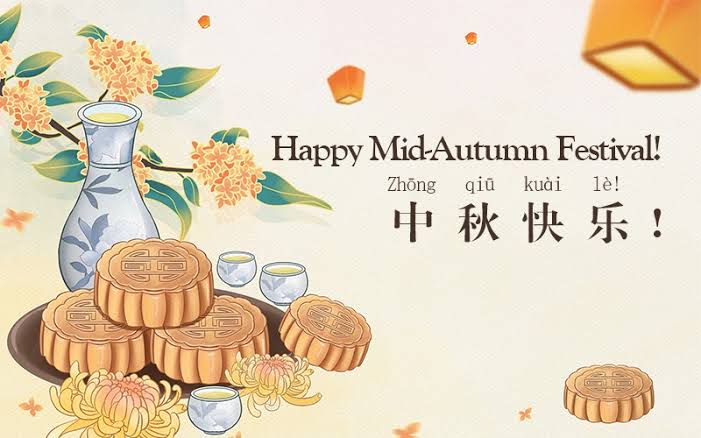
Essential Mid-Autumn Festival Greetings in Mandarin
Here are the most useful ways to wish someone a happy Mid-Autumn Festival in Mandarin Chinese. Each includes Chinese characters, pinyin, and English meaning for clear learning.
| Usage | Chinese (汉字 + 拼音) | English Meaning / Sentence |
| Standard greeting | 中秋节快乐 (Zhōngqiū jié kuàilè) | Happy Mid-Autumn Festival! |
| Family-focused | 祝你和你的家人中秋快乐 (Zhù nǐ hé nǐ de jiārén Zhōngqiū kuàilè) | Wish you and your family a happy Mid-Autumn Festival! |
| Poetic wish | 但愿人长久,千里共婵娟 (Dàn yuàn rén chángjiǔ, qiānlǐ gòng chánjuān) | Wishing us a long life to share the graceful moonlight, though thousands of miles apart. |
| Life blessing | 愿你的生活就像这十五的月亮一样,圆圆满满 (Yuàn nǐ de shēnghuó jiù xiàng zhè shíwǔ de yuèliang yíyàng, yuányuán mǎnmǎn) | Wish you a perfect life just like the roundest moon on Mid-Autumn Day. |
FAQs
No. Chinese New Year (Lunar New Year) marks the start of the new lunar year, usually in late January or February. Mid-Autumn Festival is a separate autumn harvest and reunion festival, always on the 15th day of the 8th lunar month.
Moon Festival, Mooncake Festival, Zhongqiu Jie.
2026: September 25
2027: September 15
2028: October 3
月饼 symbolize reunion and completeness because of their round shape.
No — it's not an official U.S. holiday, but it's widely observed within Asian American communities through family gatherings and public festivals.
Learn authentic Chinese from those who live and breathe the culture.
Specially tailored for kids aged 3-18 around the world!
Get started free!
Feifei graduated from Peking University with a Bachelor’s degree in Chinese Language and Literature and has 5 years of experience in Chinese language education. With a strong academic background in Chinese language and literature, she understands the learning needs of Chinese learners and is skilled at teaching in a professional, clear, and approachable way. Drawing on her extensive teaching experience, Feifei is committed to helping more learners understand the Chinese language and culture with greater ease and confidence.


![Spring Festival Couplets: A Timeless Chinese New Year Tradition [2026 Horse Year Updated]](https://wp-more.wukongedu.net/blog/wp-content/uploads/2025/01/jimeng-2026-02-11-6820-中国传统红色剪纸艺术,一匹造型优美的马,线条流畅,周围环绕着祥云、梅花和福字-520x293.webp "Spring Festival Couplets: A Timeless Chinese New Year Tradition [2026 Horse Year Updated]")


![The Real Story of Monkey King, Sun Wukong [Chinese Mythology]](https://wp-more.wukongedu.net/blog/wp-content/uploads/2025/01/Havoc-In-Heaven-520x293.jpg "The Real Story of Monkey King, Sun Wukong [Chinese Mythology]")


Comments0
Comments