

How Do You Say How are You in Chinese “你好吗”


In vibrant Chinese culture, greetings play an important role in relationships. Understanding basic Chinese, including how to say hello in Chinese shows linguistic competence. Greetings in Chinese have a significance that reflects respect, harmony, and a rich history. Learning these greetings is not just for language enthusiasts but is essential for anyone trying to engage with Chinese communities.
Whether for travel, business, or personal relationships, proficiency in Chinese greetings is important. Distinct styles and ways of greeting exist in Chinese culture that you must know. Ready to elevate your cultural communication skills? Let’s delve into these things with WuKong Education!
Key Difference between “hello” and “how are you” in Chinese
1. Hello – 你好 (nǐ hǎo)
- Usage: “你好” (nǐ hǎo) is a standard greeting used to say “hello” when you meet someone. It’s a simple, polite expression used in almost any social context when you first see someone.
- Literal Meaning: “你” (nǐ) means “you,” and “好” (hǎo) means “good” or “well.” So, it literally translates to “you good” or “hello.”
- Context: It can be used for formal and informal situations, such as meeting friends, colleagues, or even strangers.
2. How are you? – 你好吗? (nǐ hǎo ma?)
- Usage: “你好吗?” (nǐ hǎo ma?) specifically asks how someone is doing or how they are feeling. It’s equivalent to the English “How are you?” or “How’s it going?” It is typically used after greeting someone with “你好” (nǐ hǎo) or another greeting phrase.
- Literal Meaning: “你” (nǐ) means “you,” “好” (hǎo) means “good,” and “吗” (ma) is a question marker that turns a statement into a question. So, it translates to “Are you good?” or “Are you well?”
- Context: This phrase is often used when you’re interested in the person’s well-being and is a slightly more personal follow-up after “你好.”
Key Difference:
- 你好 (nǐ hǎo) is simply a greeting (like “hello”).
- 你好吗? (nǐ hǎo ma?) is a question about someone’s well-being (like “How are you?”).
While “你好” is just an introduction or greeting, “你好吗?” seeks to know more about the person’s current state or feelings.
10 Ways to Say How are You “你好吗” in Chinese and Dialect

Asking “How are you” in Chinese is not just about language; it’s a cultural key to connections. Understanding the Chinese characters used in these greetings is crucial for effective communication. China’s rich history and diverse culture shape various expressions of this question. Understanding these variations is crucial for effective communication among people. However, there are ways that you can choose to greet either formally or informally.
Learn authentic Chinese from those who live and breathe the culture.
Specially tailored for kids aged 3-18 around the world!
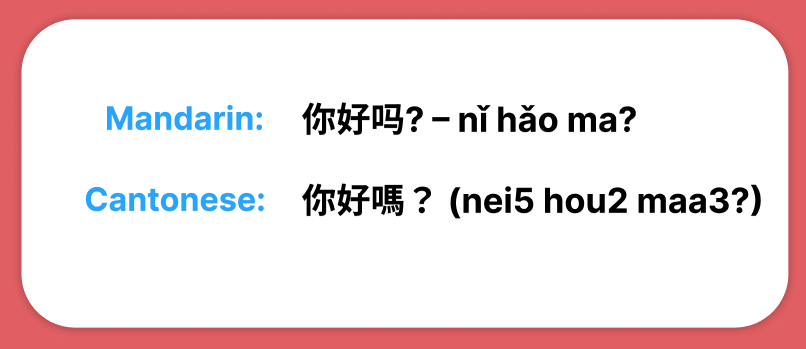
Get started free!1.你好吗? – nǐ hǎo ma?
Cantonese: 你好嗎? (nei5 hou2 maa3?)
How do you say how are you in Chinese formal? Asking 你好吗? (nǐ hǎo ma?) is a common starting point for those learning Chinese, but its usage differs from everyday native conversations. Native speakers rarely use it, finding it overly formal. Thus, informal expressions are preferred over textbook phrases. Practice and use this phrase in places where you need to be formal.
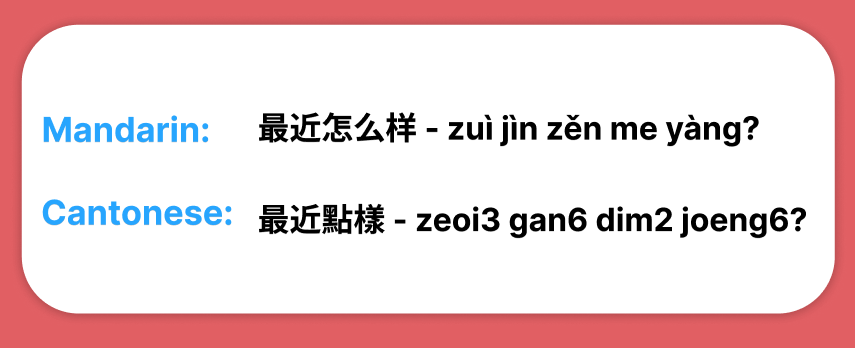
2.最近怎么样 – zuì jìn zěn me yàng?
Cantonese: 最近點樣? (zeoi3 gan6 dim2 joeng6?)
How do you say how are you in Chinese informal? “最近怎么样” (Zuì jìn zěn me yàng) is a Chinese greeting expressing genuine concern about one’s well-being. Translated as “How are things lately?” it is not just a simple inquiry but showing interest in the person’s recent experiences. The phrase exhibits Chinese culture that will enhance your interpersonal connections. It’s a linguistic bridge to build connections, inviting individuals to share their recent experiences within Chinese communication.
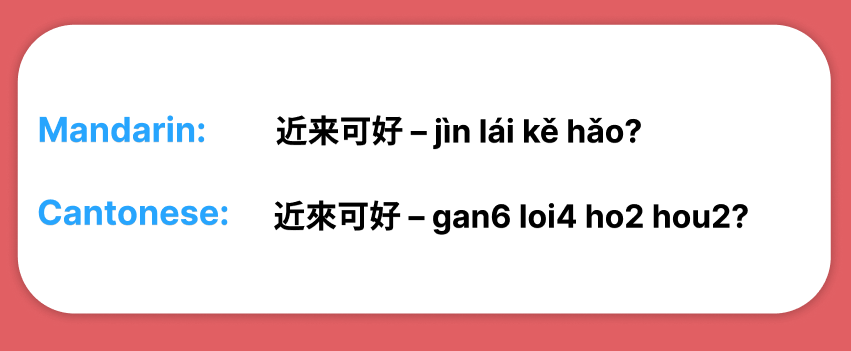
3.近来可好?– jìn lái kě hǎo?
Cantonese: 近來可好? (gan6 loi4 ho2 hou2?)
How Do You Say How Are You In Chinese punctuation?To initiate a conversation with warmth and care, the Chinese greeting 近来可好? (jìn lái kě hǎo) is used to inquire about one’s well-being. This semi-formal phrase means, ‘How have you been lately?’ It removes gaps in conversation effectively to make it a friendly way to greet. Far from being intrusive, it carries a genuine tone, allowing for easy and comfortable exchanges.
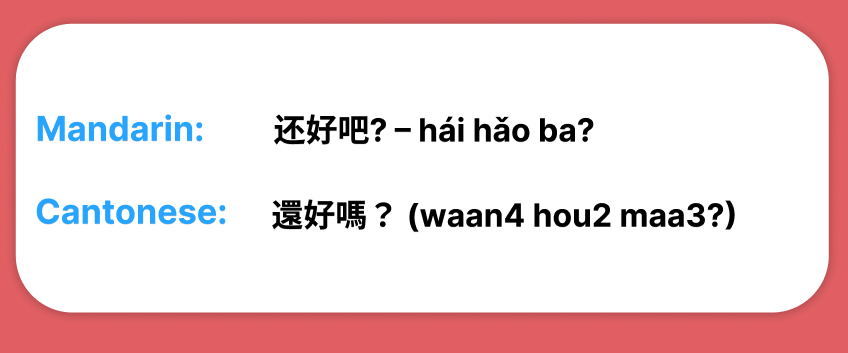
4.还好吧? – hái hǎo ba?
Cantonese: 還好嗎? (waan4 hou2 maa3?)
How do you say how are you in chinese? The Chinese greeting “还好吧?” (hái hǎo ba) serves as a versatile expression, meaning, “Are you doing alright?” or “Are things still okay?” It is frequently used among friends and family to extend a mere greeting. With the aim of concern, this phrase delves into the other person’s well-being.
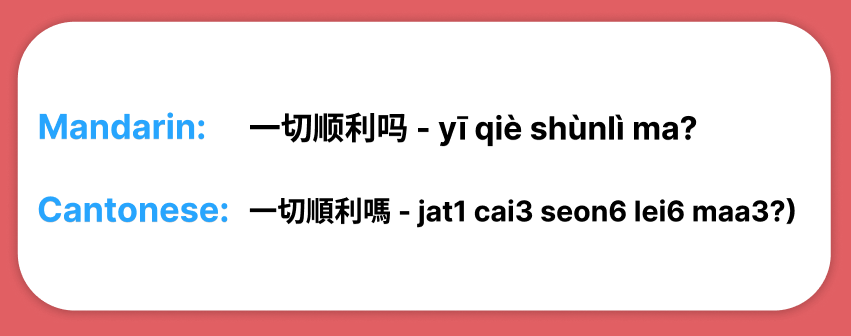
5,一切顺利吗? – yī qiè shùnlì ma?
Cantonese: 一切順利嗎? (jat1 cai3 seon6 lei6 maa3?)
In the sense of Chinese greetings, the phrase 一切顺利吗? (yīqiè shùnlì ma?) is used as an inquiry about important moments. Literally translates to “Did everything go smoothly?” it shows mere politeness, used when you ask friends about interviews or siblings about exams. So, next time when you see a significant event, let 一切顺利吗? be the bridge for genuine connections.
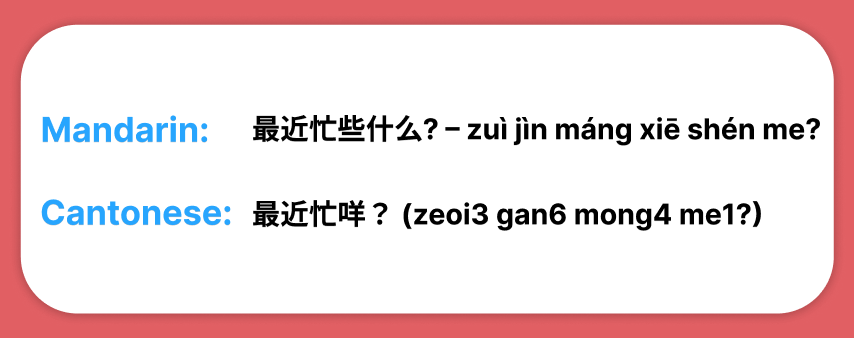
6.最近忙些什么? – zuì jìn máng xiē shén me?
Cantonese: 最近忙咩? (zeoi3 gan6 mong4 me1?)
How do you say how are you in Chinese informal? In the hustle and bustle of life, the Chinese greeting 最近忙些什么? (zuì jìn máng xiē shén me) acts like a friendly expression to inquire about someone. It translates to “What have you been busy with lately?” This question is a key to understanding the pace of their life and catching up after a long time.
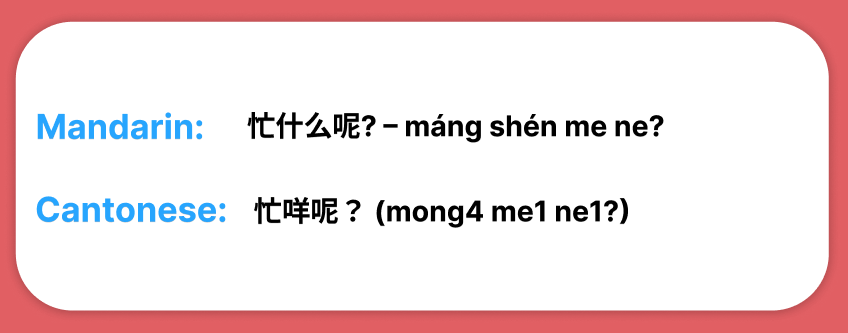
7.忙什么呢? – mánɡ shén me ne?
Cantonese: 忙咩呢? (mong4 me1 ne1?)
The Chinese greeting 忙什么呢? (mánɡ shén me ne) translates to “What are you busy doing these days?” It serves as a friendly inquiry about someone’s recent activities. Whether you’re checking on a friend’s well-being or planning to spend time together, this phrase helps fill the gap during conversation. So, the next time you wish to catch up with friends, confidently use this greeting to create meaningful conversations.
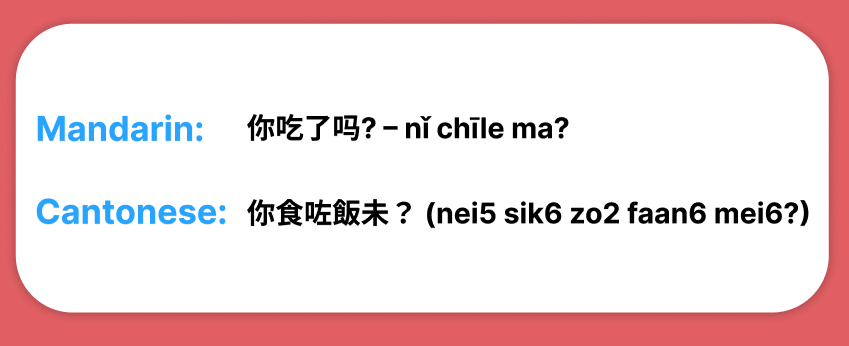
8.你吃了吗? – nǐ chīle ma?
Cantonese: 你食咗飯未? (nei5 sik6 zo2 faan6 mei6?)
How Do You Say hi In Chinese? The Chinese greeting “你吃了吗?” (nǐ chīle ma) translates to “Have you eaten yet?” This phrase includes the cultural demonstration of expressing care and concern for others. It is commonly used among friends and family. While it literally inquires about one’s meal, it isn’t an invitation to share culinary details. Knowing how to say hello in Chinese, including phrases like 你吃了吗?, is essential for cultural understanding.
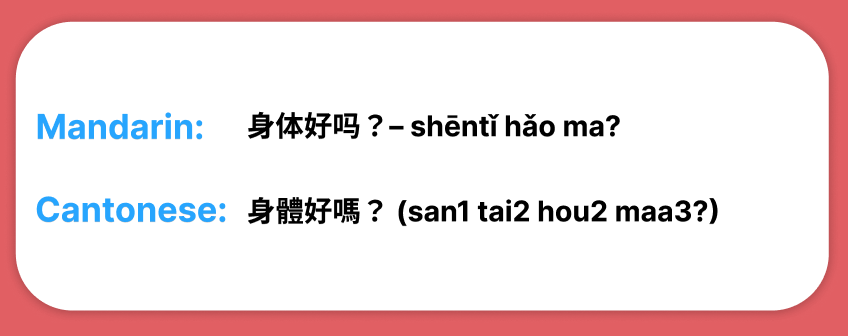
9.身体好吗?– shēntǐ hǎo ma?
Cantonese: 身體好嗎? (san1 tai2 hou2 maa3?)
The formal Chinese greeting 身体好吗? (shēntǐ hǎo ma?) translates to “How is your body?” It goes beyond a casual greeting, showing genuine concern for someone’s health. The characters 身体 mean “body,” making it a thoughtful way to inquire about well-being. This phrase is particularly used when addressing someone older or distant, also showing cultural values of respect and care.
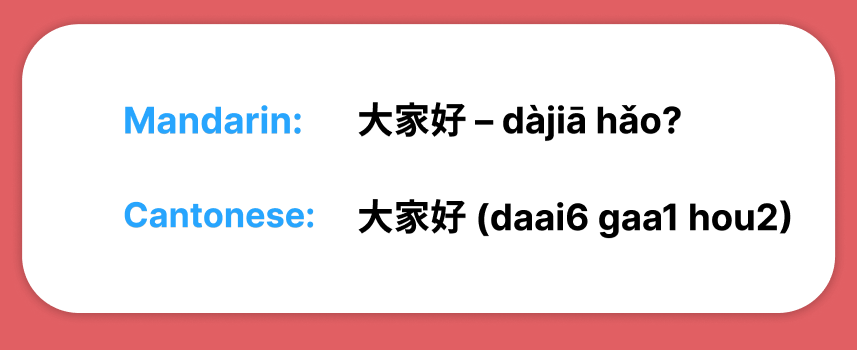
10.大家好 – dàjiā hǎo?
Cantonese: 大家好 (daai6 gaa1 hou2)
How do you say how are you in Chinese formal? 大家好 (dàjiā hǎo) is a versatile Chinese greeting, translating to “Hello, everyone!” It is suitable for various social contexts to address people. Whether addressing a class, leading a meeting, or giving a speech, this phrase fosters a sense of unity. Its universal appeal transcends specific relationships, welcoming everyone present.
Empower your child’s critical thinking with resh, modern English reading and writing courses!
Suitable for global learners in grades 3-6.
5 Answers to Reply to How are You “你好吗” in Chinese
Responding to “How are you?” in Chinese offers concentration and understanding. Various phrases are used for different situations, ensuring you can adapt your reply accordingly. From expressing general well-being to specific details, mastering diverse responses enables you to have better social interactions. As you explore the complexities of Chinese, these versatile replies will help you in your conversational skills.
1.我还好 – wǒ hái hǎo
Cantonese: 我仲好 (ngo5 zung6 hou2)
“Wǒ hái hǎo” translates to “I’m still good” in Chinese. This response to “How are you?” indicates a positive state but suggests there might be a gap for improvement or change. It conveys a sense of well-being while also having the possibility of further enhancement in one’s mood or circumstances.
2.不错 – búcuò
Cantonese: 唔錯 (m4 co3)
不错 (búcuò) is a Chinese phrase often used as a positive response to “How are you?” It translates to “not bad” or “pretty good.” This simple yet effective reply conveys a sense of well-being without elaborating on details. It’s a friendly and commonly used way to positively respond to one’s current state.
3.我很好 – wǒ hěn hǎo
Cantonese: 我很好 (ngo5 hen3 hou2)
When you respond “我很好” (wǒ hěn hǎo) to the question How are you, it means “I am fine” in Chinese. This simple and positive reply indicates a state of well-being. It’s a straightforward expression commonly used in various situations. Embracing this phrase in your responses allows you to have a cheerful conversation environment.
Similarly, the greeting 早上好 (zǎo shàng hǎo) means good morning and is commonly used in both formal and informal settings.
4.挺好的 – tǐng hǎo de
Cantonese: 挺好嘅 (ting2 hou2 ge3)
“挺好的” (tǐng hǎo de) is a positive response to the question “How are you?” in Chinese. It means “quite good” or “pretty good” to tell about your health. This response shows a positive state of well-being without going into extensive detail. It makes it a commonly used and well-received response in various casual situations.
5.一切都好– yīqiè dōu hǎo
Cantonese: 一切都好 (jat1 cai3 dou1 hou2)
切都好 (yīqiè dōu hǎo) is a Chinese response to “How are you?” that translates to “Everything is good.” This phrase shows an overall positive well-being to ensure the health of your family and friends. The simplicity of 切都好 contains positivity while maintaining cultural expressions in Chinese communication.
Common Mistakes When Using Hello and How are You In Chinese

When learning “How Do You Say How Are You In Chinese”, certain common mistakes can arise, hindering effective communication. These errors often fall under tonal pronunciation, formal or informal phrase usage, and a lack of cultural understanding. For instance, the greeting 下午好 (xiàwǔ hǎo) means good afternoon and should be used appropriately based on the time of day.
1. Overusing 你好吗? (nǐ hǎo ma?)
- Mistake: Many learners mistakenly think they should ask “你好吗?” (nǐ hǎo ma?) every time they greet someone. However, in Chinese, it’s not common to use “How are you?” as frequently as in English. Saying “你好吗?” is often reserved for more personal or meaningful encounters, and even then, it’s not used every time you meet someone.
- Correction: Use 你好 (nǐ hǎo) or a variation like 您好 (nín hǎo) (the polite form) for general greetings. Save “你好吗?” for when you’re genuinely interested in someone’s well-being or if the conversation is more personal.
2. Using 你 (nǐ) in Formal Situations
- Mistake: “你” (nǐ) means “you,” and while it’s appropriate in informal settings, it can sound too casual in formal contexts, especially when addressing elders, superiors, or strangers.
- Correction: Use 您 (nín), the respectful form of “you,” in formal or polite situations. For example, 您好 (nín hǎo) is the polite way to say “hello” to someone you don’t know well or in a formal context.
3. Asking “How are you?” Too Early
- Mistake: Asking “你好吗?” (nǐ hǎo ma?) right after saying “hello” can sound abrupt if not used in the right context. In Chinese culture, small talk is not as common as in Western cultures, and jumping straight into personal questions like “How are you?” can be seen as too forward or overly familiar.
- Correction: After saying “你好” (nǐ hǎo), it’s common to start a conversation with something more neutral, like asking about the person’s day, work, or just continuing with a polite greeting. “你好吗?” is better used after you’ve had a brief exchange or when you’re catching up with someone.
4. Using “How are you?” Too Casually
- Mistake: In Chinese, “你好吗?” is not used casually like “How’s it going?” in English. It is generally reserved for when you haven’t seen someone in a while or when you’re genuinely interested in their well-being.
- Correction: If you’re just casually greeting someone, stick to “你好” (nǐ hǎo) or “您好” (nín hǎo). If you want to ask “How are you?” in a more casual or friendly way, you can use “最近怎么样?” (zuì jìn zěn me yàng?), which means “How’s everything been lately?”
5. Mispronouncing “Hello” or “How are you?”
- Mistake: Mispronunciation is a common issue, especially with tones. For example, the pronunciation of “你好” (nǐ hǎo) is critical because “你” (nǐ) has a third tone, and “好” (hǎo) has a third tone too. Mispronouncing the tones can lead to confusion or misunderstandings.
- Correction: Make sure to pronounce the tones accurately. “你” (nǐ) is pronounced with a rising tone, and “好” (hǎo) is pronounced with a falling-rising tone.
6. Saying “你好吗?” (nǐ hǎo ma?) to Someone You’ve Just Met
- Mistake: In Western cultures, it’s common to ask “How are you?” when meeting someone, even for the first time. In Chinese, though, this can seem too personal, especially if you don’t have an established relationship.
- Correction: Stick to the formal “你好” (nǐ hǎo) or “您好” (nín hǎo) when meeting someone for the first time. “你好吗?” can be used after a few exchanges or once you’ve established a rapport.
7. Forgetting to Use Proper Contextual Language
- Mistake: Failing to adjust your language based on the situation. For instance, using casual “你好” (nǐ hǎo) in formal settings, or not being mindful of context in personal relationships.
- Correction: Always be aware of the context. Use 您 (nín) for elders, superiors, or strangers. “你好” (nǐ hǎo) is for casual or peer-level conversations. And use more polite and formal questions when appropriate, such as 您身体好吗? (nín shēn tǐ hǎo ma?) to ask about someone’s health in a more respectful way.
Best Ways to Learn Greetings in Chinese
WuKong offers an engaging platform for mastering Mandarin, adding an exciting layer to your language journey. With tailored learning options and interactive classes, WuKong makes diving into Mandarin effortless for everyone.
- Free Trial Classes: Experience before committing! WuKong offers free classes, allowing you to explore and decide what suits you best.
- Varied Learning Packages: Choose from various packages tailored to different learning needs. Whether it’s a bit of learning or a comprehensive set, WuKong caters to all.
- Convenient Learning: Access Mandarin classes anytime, anywhere! WuKong’s online classes only require a computer and internet, making learning incredibly convenient.
- Affordable Options: WuKong understands that learning should be enjoyable and budget-friendly. Offering diverse packages at different prices ensures everyone can find a suitable option.
FAQs About How Do You Say How Are You In Chinese
Q1: How do you respond to Ni Hao?
In response to the greeting “Ni Hao?” (你好) in Mandarin Chinese, a common and polite reply is to reciprocate the greeting by saying “Ni Hao!” (你好). This straightforward exchange signifies a mutual acknowledgment of each other’s well-being and sets a positive tone for further conversation. One may include additional inquiries to engage in a more extended and meaningful dialogue.
Q2: How do the Chinese show respect?
Chinese culture strongly emphasizes respect, which is expressed through various customs. Politeness in language, using proper titles, and employing formal greetings like “Nin Hao” (您好) demonstrate respect. Physical gestures such as bowing, offering, and receiving items with both hands signify courtesy. Listening attentively, avoiding interrupting, and expressing humility also convey respect.
Conclusion
How do you say how are you and hello in Chinese? In the vibrant Chinese culture, understanding the significance of Chinese greetings is important. It is not merely for language enthusiasts but a key for anyone seeking to engage with Chinese communities. They establish trust and genuine connections and eliminate language barriers in personal and professional spheres.
If you want to learn more Chinese expressions, WuKong Chinese offers an expertly designed Chinese language curriculum that will help your child build strong language skills
Learn authentic Chinese from those who live and breathe the culture.
Specially tailored for kids aged 3-18 around the world!
Get started free!
Bella holds a Master’s degree from Yangzhou University and brings 10 years of extensive experience in K-12 Chinese language teaching and research. A published scholar, she has contributed over 10 papers to the field of language and literature. Currently, Bella leads the research and development of WuKong Chinese core courses, where she prioritizes academic rigor alongside student engagement and cognitive development. She is dedicated to building a robust foundation for young learners covering phonetics (Pinyin), characters, idioms, and classical culture while ensuring that advanced courses empower students with comprehensive linguistic mastery and cultural insight.


![List of 214 Basic Chinese Radicals and Meanings [Free PDF]](https://wp-more.wukongedu.net/blog/wp-content/uploads/2024/05/生成汉字部首列表图片-最大宽度-1024-最大高度-768-520x293.webp "List of 214 Basic Chinese Radicals and Meanings [Free PDF]")


Comments0
Comments