

How to Say Good Morning in Chinese: 早上好, 早, 早安 & More


How do you say “good morning” in Chinese? The most standard Mandarin expression is 早上好 (zǎoshang hǎo), but it is not the only option.
In everyday Chinese, you may also hear 早 (zǎo), while 早安 (zǎo ān) is especially common in Taiwan and is also widely understood as a morning greeting. In Cantonese, the everyday equivalent is 早晨. The best expression depends on who you are talking to, where you are, and how formal the situation is.
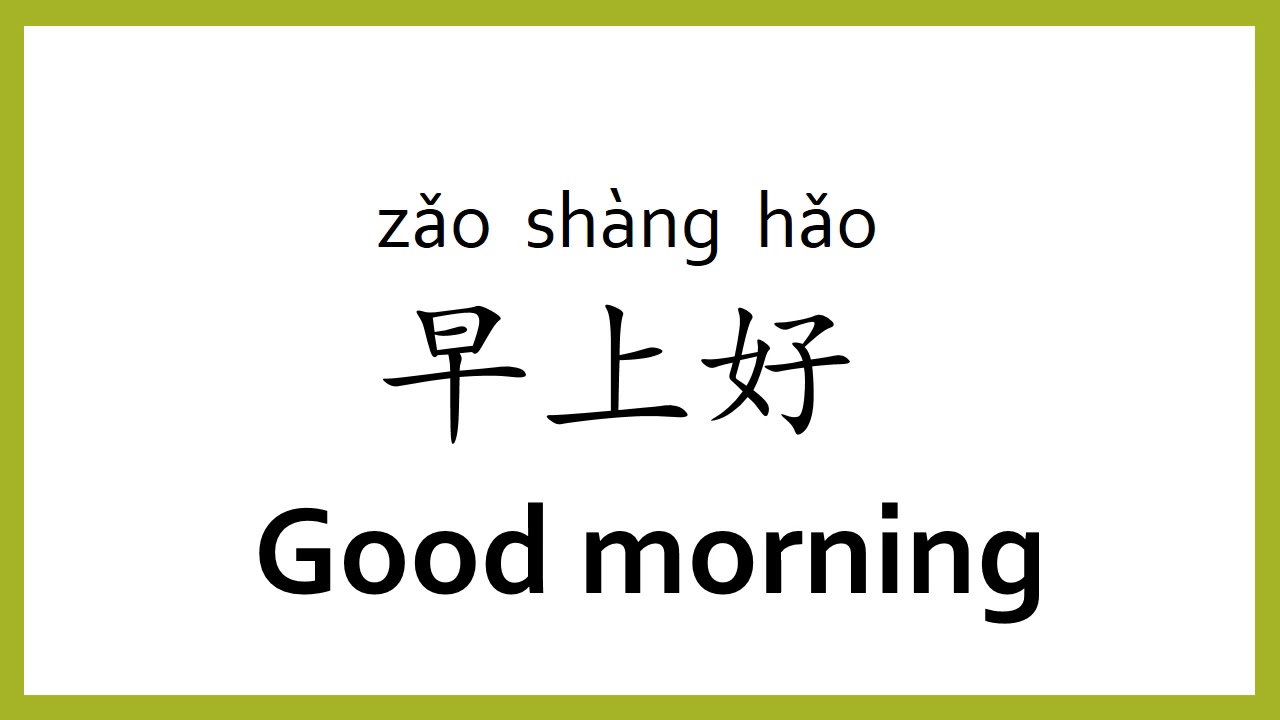
The 4 Most Useful Ways to Say “Good Morning” in Chinese
| Chinese | Pinyin | Meaning | Best Use |
|---|---|---|---|
| 早上好 | zǎoshang hǎo | Good morning | Standard, polite, and widely understood |
| 早 | zǎo | Morning! / Good morning! | Casual everyday speech |
| 早啊 | zǎo a | Morning! | Friendly and conversational |
| 早安 | zǎo ān | Good morning | Common in Taiwan; also used in messages and friendly greetings |
| 早晨 | zǎo chen | Good morning | Cantonese |
For a beginner learning Mandarin, the easiest rule is:
Use 早上好 when you want to be safe and polite.
Use 早 with friends, classmates, coworkers, or people you know well.
1. 早上好 (zǎoshang hǎo): The Standard “Good Morning”
早上好 (zǎoshang hǎo) is the most straightforward Mandarin translation of “good morning.”
It is made up of:
- 早上 (zǎoshang) = morning
- 好 (hǎo) = good
So, literally, 早上好 means something like “morning good.”
It works well when greeting a teacher, an unfamiliar person, a customer, a colleague, or a group of people. It can also sound perfectly natural in a classroom or other polite setting.
Example
A: 早上好,王老师!
Zǎoshang hǎo, Wáng lǎoshī!
Good morning, Teacher Wang!
B: 早上好!
Zǎoshang hǎo!
Good morning!
2. 早 (zǎo): The Most Natural Casual “Morning!”
If you hear Chinese speakers greet each other with just 早 (zǎo), they are not being rude or incomplete.
早 literally means “early” or “morning” depending on context, but when used as a greeting it means “Morning!” or “Good morning!”
This is one of the most useful expressions to learn because it is short, natural, and common in everyday conversation.
Example
A: 早!
Zǎo!
Morning!
B: 早!
Zǎo!
Morning!
It is especially natural when you meet someone briefly in the morning.
Learning tip: For conversational Mandarin, remember 早 = “Morning!” rather than treating it as a shortened version you must always replace with 早上好.

3. 早啊 (zǎo a): A Friendlier, More Conversational Version
You may also hear 早啊 (zǎo a).
The 啊 (a) particle adds a relaxed, friendly tone. It does not change the basic meaning of 早, but it can make the greeting sound warmer or more conversational.
This form is particularly common in casual speech and informal messages.
Example
早啊!今天上班吗?
Zǎo a! Jīntiān shàngbān ma?
Morning! Are you working today?
4. 早安 (zǎo ān): “Good Morning” With a Softer Feel
早安 (zǎo ān) is another way to greet someone in the morning.
The character meanings are:
- 早 (zǎo) = early / morning
- 安 (ān) = peace / safe
The expression can therefore be understood literally as something like “morning peace.”
The Ministry of Education’s Revised Mandarin Chinese Dictionary defines 早安 as a greeting used when people meet in the morning.
The important point for learners is regional usage. 早安 is particularly associated with Taiwan, where it is a familiar morning greeting in both everyday speech and messages.
Example
早安!今天也加油!
Zǎo ān! Jīntiān yě jiāyóu!
Good morning! Good luck today too!
早上好 vs. 早安
There is no need to think of one as “correct” and the other as “incorrect.”
A simple distinction is:
- 早上好 → standard Mandarin, broadly understood
- 早 → short and casual
- 早啊 → casual and friendly
- 早安 → especially common in Taiwan and also common in written or friendly greetings
When Should You Use 早上好 vs. 早?
The easiest way to choose is to think about relationship + setting.
| Situation | Best Choice |
|---|---|
| Greeting a teacher | 早上好 |
| Greeting a new acquaintance | 早上好 |
| Greeting a customer | 早上好 |
| Greeting your coworker | 早 / 早上好 |
| Greeting a close friend | 早 / 早啊 |
| Greeting family | 早 / 早啊 |
| Sending a friendly morning text | 早安 / 早啊 |
| Speaking Cantonese | 早晨 |
How to Respond When Someone Says “Good Morning” in Chinese
You do not need a complicated response.
Response 1: Repeat the greeting
A: 早上好!
B: 早上好!
This is the safest response in a polite setting.
Response 2: Use 早
A: 早!
B: 早!
This is very natural among friends and coworkers.
Response 3: Add a simple question
A: 早上好!
B: 早上好!你今天怎么样?
Zǎoshang hǎo! Nǐ jīntiān zěnmeyàng?
Good morning! How are you today?
Another useful question is:
睡得好吗?
Shuì de hǎo ma?
Did you sleep well?
This helps turn a memorized greeting into a real conversation.

Common Mistakes English Speakers Make
Mistake 1: Pronouncing 早 as a simple rising tone
早 (zǎo) is a third-tone syllable, not simply a second-tone rising syllable.
Mistake 2: Giving every syllable equal stress
Natural 早上好 is not pronounced like three equally strong English syllables. 上 in 早上 is commonly neutral in everyday Mandarin.
Mistake 3: Using 早上好 for every situation
It is always useful and understood, but Chinese speakers often shorten it to 早 in casual interactions.
Mistake 4: Treating 早晨好 as the traditional form of 早上好
This is incorrect. 早晨 is a separate word, and 早晨 is particularly important in Cantonese as a morning greeting.
Mistake 5: Assuming 早安 is used identically everywhere
早安 is a valid Chinese greeting, but regional preferences differ. It is especially familiar in Taiwan.
FAQ About Good Morning in Chinese
1. Are there different ways to say Good Morning in Chinese?
Yes, there are various ways to say Good Morning in Chinese depending on the context and dialect. Some of the common phrases include “早上好” in Mandarin Chinese, “早晨好” in traditional Chinese. It’s always best to consult with a native speaker or language resource for guidance on the appropriate way to say Good Morning based on your specific situation.
2. Is 早 or 早上好 more natural?
Both are natural. 早上好 is the fuller and more polite greeting, while 早 is shorter and especially common in casual everyday interactions.
3. What is the difference between 早安 and 早上好?
Both can mean “good morning.” 早上好 is a broadly understood Mandarin greeting, while 早安 is especially associated with Taiwan and is also common in written or friendly greetings.
More Basic Chinese Phrases You Must Learn
| Chinese Phrase | Description |
|---|---|
| goodnight in chinese | Different ways to say good night to friends, family, or children. |
| what’s up in Chinese | Casual greeting used among friends. |
| Thank You in Chinese | Express gratitude in formal and informal situations. |
| cheers in chinese | Toasting with friends or at a formal dinner. |
| good morning in chinese (this article) | Morning greeting for family, colleagues, or classmates. |
| hi in chinese | Saying hello in formal meetings or to friends. |
| i don’t know in chinese | Politely indicating you don’t have an answer. |
| im sorry in chinese | Apologizing for a minor mistake or a serious matter. |
| nice to meet you in chinese | First-time introduction in a casual or business setting. |
| okay in mandarin | Giving agreement, approval, or saying “It’s fine.” |
| please in chinese | Making a polite request. |
| what is your name in chinese | Asking someone’s name when you first meet them. |
Summary
Above we introduced ways to say Good Morning in Chinese. In Chinese culture, it is important to know how to properly say Good Morning as it conveys politeness and respect, establishes rapport and builds relationships.
The most common phrase in Mandarin Chinese is “早上好zǎo shàng hǎo”, while Cantonese uses “早晨好” with slight differences in pronunciation. Traditional Chinese characters may also be used depending on context and formality. Tones play a crucial role in correct pronunciation and there are various resources available for guidance on proper usage.
If you’re looking for high-quality online Chinese classes for kids, WuKong Chinese offers age-appropriate lessons led by native speakers with a deep understanding of the Chinese language and culture.
Learn authentic Chinese from those who live and breathe the culture.
Specially tailored for kids aged 3-18 around the world!
Get started free!
A distinguished scholar with a Master’s in Chinese Philology, Meng Yuan brings over 8 years of global expertise to Wukong Education. As a Senior Curriculum Architect, she has spent 6 years on the front lines of international classrooms, followed by 2 years spearheading pedagogical research. Meng Yuan specializes in the cognitive development of Pinyin and Hanzi acquisition and has successfully guided hundreds of students through competitive Chinese entrance exams. At Wukong Chinese, she leads the original content initiative, ensuring every lesson aligns with the highest international teaching standards.


![How to Get Chinese Phone Number Easily? [2026 Updated]](https://wp-more.wukongedu.net/blog/wp-content/uploads/2024/04/image-361-520x293.png "How to Get Chinese Phone Number Easily? [2026 Updated]")
![Best Chinese Cartoons for Kids [2026 Update]: Fun Mandarin Shows to Learn Chinese and Explore Culture](https://wp-more.wukongedu.net/blog/wp-content/uploads/2024/02/image-66-520x293.png "Best Chinese Cartoons for Kids [2026 Update]: Fun Mandarin Shows to Learn Chinese and Explore Culture")


Comments0
Comments