

Quick Conversion: How Many Seconds in an Hour? [with an easy-use calculator]


There are 60 seconds in 1 minute and 60 minutes in 1 hour, so 1 hour = 60 × 60 = 3,600 seconds.
To convert any number of hours to seconds, simply multiply: Seconds = Hours × 3,600. To go the other way (seconds to hours), divide by 3,600.
This article provides a handy online conversion calculator — just enter the number of hours (or seconds) to get instant results, along with useful comparison tables and charts.
This time unit conversion is part of the U.S. Common Core Math standard 4.MD.A.1 and 4.MD.A.2 (Grade 4 Measurement & Data), which focuses on knowing relative sizes of units (hr, min, sec) and solving word problems involving intervals of time by expressing larger units in terms of smaller ones.

How Many Seconds in an Hour?
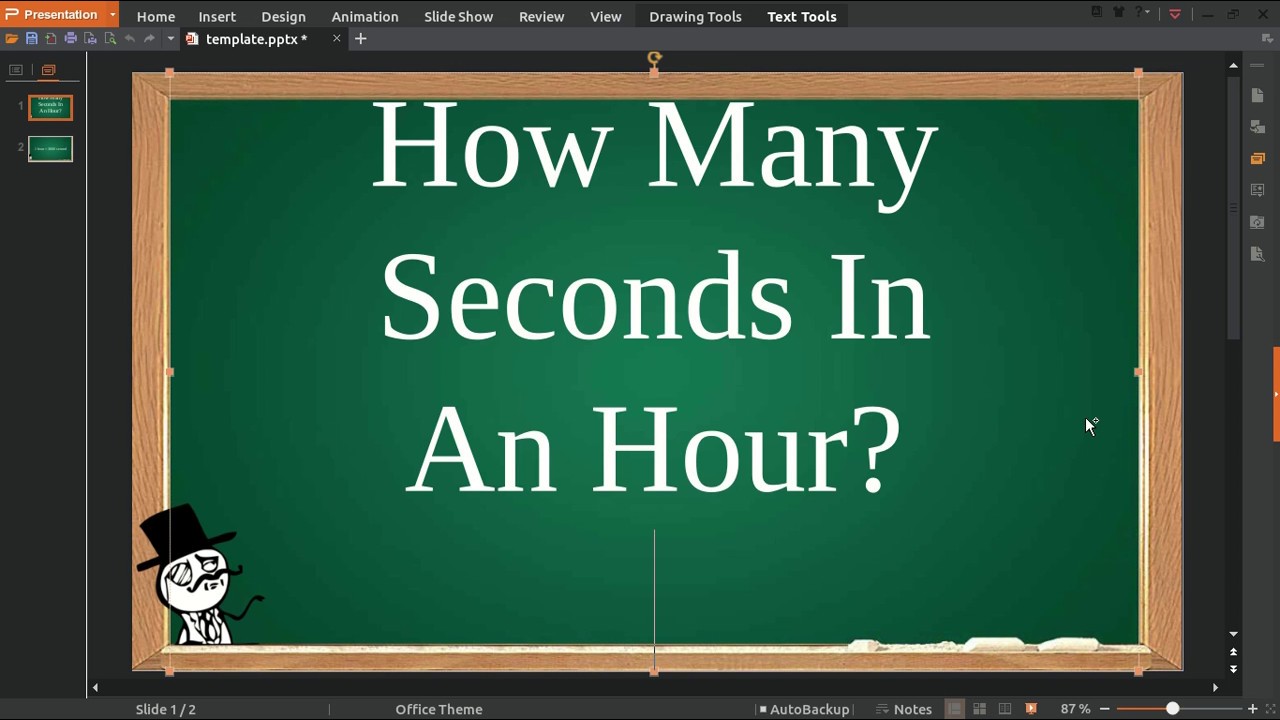
The answer to the question “How many seconds are in one hour?” is 3600 seconds.
Discovering the maths whiz in every child,
that’s what we do.
Suitable for students worldwide, from grades 1 to 12.
Get started free!1 hour = (60 minutes hour) × (60 seconds/minute) = 3600 seconds/hour
⏱️ Time Duration Converter / 时间换算器
Calculate years, days, hours, and minutes / 轻松计算年、天、小时与分钟
1 Year (年) = 525,600 Minutes (分钟)
How to Convert Hours to Seconds?
To find the total number of seconds in one hour, we need to multiply the number of minutes in an hour by the number of seconds in one minute. Let’s break down the process.
Step 1: Understanding the Units:
- 1 hour is defined as the time it takes for the Earth to rotate 15 degrees on its axis. This time unit is divided into smaller units for easier measurement.
- An hour can be divided into 60 minutes.
- Each minute is further divided into 60 seconds.
Step 2: Confirm the formula:
To convert hours to seconds, we use the following formula:
Seconds = Hours x 3600
Here, 3600 is derived from the fact that there are 60 seconds in one minute and 60 minutes in one hour:
3600 = 60 minutes × 60 seconds
Step 3: Performing the Calculation:
Let’s start with 1 hour, since 1 hour is equal to 60 minutes, Then, multiply by the number of seconds in one minute:

Therefore, the total number of seconds in 1 hour is 3600 seconds. In summary, when you calculate the number of seconds in one hour, you find that there are 3,600 seconds in total, derived from the conversion of 60 minutes per hour and 60 seconds per minute.
Why is One Hour 3600 Seconds?

The designation of one hour as 3,600 seconds stems from historical timekeeping systems. The division of time into hours and minutes has roots in ancient civilizations, particularly the Egyptians, who devised a 12-hour day based on the movement of the sun.
The modern system we use today, which includes 60 seconds in a minute and 60 minutes in an hour, is a result of a sexagesimal (base-60) system inherited from the Babylonians.
1 hour = 60 minutes × 60 seconds /minute = 3600 seconds
This setup is a product of a sex agesimal (base-60) system inherited from the Babylonians. The advantages of this system include ease of division and practical applications in various fields such as astronomy and navigation, making it a standardized way to measure time in everyday life. As a result, when we refer to 1 hour 60 minutes, we are actually affirming the established relationship that defines 3600 seconds in an hour.
Second
A second (sec) is the base unit of time in the International System of Units (SI). It is defined as the duration of 9,192,631,770 periods of the radiation corresponding to the transition between two hyperfine levels of the ground state of the cesium-133 atom. This precise definition makes one second (sec) a fundamental measurement in timekeeping.
Understanding the definition of a second (sec) is crucial, especially when we need to convert seconds into other time units. For instance, knowing that 3600 seconds equal one hour allows for easy conversions between these units. This clarity helps in various fields, from physics to everyday scheduling, where timing can significantly impact outcomes.
Hour
An hour is a larger unit of time that is commonly used in daily life, education, and various industries. Defined as 60 minutes, an hour serves as a practical measure for more extended periods. Understanding its relation to seconds and how to convert between these units can enhance time management skills and improve productivity. hours, hours
Mastery Table: Time Unit Conversions for Students
Converting between seconds, minutes, and days is a fundamental skill in 3rd and 4th grade Measurement & Data (MD). Understanding these calculations helps in solving multi-step word problems involving time intervals. Use this reference guide to see how different units of time relate to each other, from a single second to an entire year.
CCSS.MATH.CONTENT.3.MD.A.1 & 4.MD.A.2 (Solving problems involving measurement and time)
| Time Unit A | Equivalent Unit B | Math Skill | Detailed Guide |
| 1 Hour | 3,600 Seconds | Unit Mastery | How many seconds in an hour? (This article) |
| 1 Day | 86,400 Seconds | Multi-step Math | How many seconds in a day? |
| 72 Hours | 3 Days | Division Practice | How many days is 72 hours? |
| 1 Week | 168 Hours | Scheduling Math | How many hours in a week? |
| 1 Year | 52.14 Weeks | Calendar Science | How many weeks in a year? |
Conclusion
How Many Seconds are in an Hour? This guide has provided a comprehensive answer and explored the calculations, conversions, and practical applications of these essential units of time. Mastering these concepts can significantly enhance your time management skills and overall productivity. If you’re looking to deepen your understanding of math and time conversions, consider enrolling in a online math classes for kids at WuKong Math.
Discovering the maths whiz in every child,
that’s what we do.
Suitable for students worldwide, from grades 1 to 12.
Get started free!
I am an educator from Yale University with ten years of experience in this field. I believe that with my professional knowledge and teaching skills, I will be able to contribute to the development of Wukong Education. I will share the psychology of children’s education and learning strategies in this community, hoping to provide quality learning resources for more children.

![How Many Hours in a Year? Years to Hours Conversion [Solved]](https://wp-more.wukongedu.net/blog/wp-content/uploads/2024/12/image-6-520x293.png "How Many Hours in a Year? Years to Hours Conversion [Solved]")


![How Many Minutes Are in a Year? [With Online Calculator]](https://wp-more.wukongedu.net/blog/wp-content/uploads/2024/09/image-19-520x293.png "How Many Minutes Are in a Year? [With Online Calculator]")


![Multiplication Chart 1-20 [Free Printable & PDF Download]](https://wp-more.wukongedu.net/blog/wp-content/uploads/2024/09/image-10-520x293.png "Multiplication Chart 1-20 [Free Printable & PDF Download]")


Comments0
Comments