

10 Hardest Math Problems In The World With Solutions


Interested in mathematics? Do you want to know what the hardest math problem in the world is? The mysterious world of mathematics is filled with puzzling problems that can stump even the most seasoned mathematicians. WuKong Education will present the world’s 10 hardest math problems, both solved problems and unsolved problems that continue to stump the experts.
Hardest Math Problem: Try Two Famous Unsolved Math Problems Yourself
Try Two Famous Unsolved Math Problems Yourself
Collatz and Goldbach are easy to test with any number you like. Pick one, watch what happens, then ask: could it ever fail?
The rule: if the number is even, halve it. If it is odd, triple it and add 1. Repeat. The Collatz Conjecture says you always end up at 1, but nobody has proved it for every number.
Try:
Starting at 27, the sequence reaches 1 after 111 steps.
111steps to reach 1
9,232highest value reached
41 / 70odd steps / even steps
Highest point: 9,232 at step 77. Odd numbers are shown in bold orange below.
27 → 82 → 41 → 124 → 62 → 31 → 94 → 47 → 142 → 71 → 214 → 107 → 322 → 161 → 484 → 242 → 121 → 364 → 182 → 91 → 274 → 137 → 412 → 206 → 103 → 310 → 155 → 466 → 233 → 700 → 350 → 175 → 526 → 263 → 790 → 395 → 1,186 → 593 → 1,780 → 890 → 445 → 1,336 → 668 → 334 → 167 → 502 → 251 → 754 → 377 → 1,132 → 566 → 283 → 850 → 425 → 1,276 → 638 → 319 → 958 → 479 → 1,438 → 719 → 2,158 → 1,079 → 3,238 → 1,619 → 4,858 → 2,429 → 7,288 → 3,644 → 1,822 → 911 → 2,734 → 1,367 → 4,102 → 2,051 → 6,154 → 3,077 → 9,232 → 4,616 → 2,308 → 1,154 → 577 → 1,732 → 866 → 433 → 1,300 → 650 → 325 → 976 → 488 → 244 → 122 → 61 → 184 → 92 → 46 → 23 → 70 → 35 → 106 → 53 → 160 → 80 → 40 → 20 → 10 → 5 → 16 → 8 → 4 → 2 → 1
The idea: Goldbach’s Conjecture says every even number greater than 2 is the sum of two prime numbers. Computers have checked it for enormous numbers, but there is still no proof that it holds for all of them.
Try:
28 can be written as a sum of two primes in 2 different ways.
Still open: a computer can test one number at a time, but a proof has to work for every number, forever. That gap is why both problems are on the list of hardest math problems.
More brain-teasers: 60 Best Math Riddles for Kids · 5 Hardest Math Problems on the SAT
Why is this a trap?
This viral problem divided the world into two fiercely arguing camps, and both sides actually have a mathematical point! It all depends on which historical “order of operations” rule you follow:
- The Case for 9 (The Modern Standard): Following modern PEMDAS/BODMAS rules, you solve the parentheses first: 1 + 2 = 3. Then, you rewrite the expression as 6 ÷ 2 x 3. Since division and multiplication have the same priority, you must calculate from left to right. 6 ÷ 2 = 3, and then 3 x 3 = 9.
- The Case for 1 (The Historical/Implied Standard): Many older textbooks and calculators treat “implied multiplication” (multiplication without a sign, like 2(3)) as a single, higher-priority block. Under this rule, you must multiply 2 x 3 = 6 before dividing. Thus, 6 ÷ 6 = 1.
Why it matters: This isn’t just a internet meme—it proves that math isn’t just about cold numbers; it’s a language governed by punctuation rules. If the punctuation is ambiguous, even computers will argue over the answer!
Summary of the 10 hardest math problems
Mathematical problems such as the Poincaré Conjecture and Fermat’s Last Theorem took centuries to solve. However, other problems, such as the Riemann hypothesis and Goldbach’s conjecture, continue to baffle mathematicians and inspire new generations to find solutions.
Discovering the maths whiz in every child,
that’s what we do.
Suitable for students worldwide, from grades K-12.
Get started free!It is a basic fact in number theory that there are infinitely many primes. They serve as a foundation for various conjectures related to prime numbers. One such well-known conjecture is the Twin Prime Conjecture, which questions whether there are infinitely many prime numbers that differ by 2.
Next, we take a look at some of the 10 hardest math problems. Many mathematical problems have taken mathematicians decades or even centuries to solve, while others remain unsolved.
| # | 10 Hardest Math Problems | Status |
| 1 | The Poincaré Conjecture | ✅ Solved |
| 2 | The Four Color Theorem | ✅ Solved |
| 3 | The Collatz Conjecture | ❌ Unsolved |
| 4 | Goldbach’s Conjecture | ❌ Unsolved |
| 5 | The Twin Prime Conjecture | ❌ Unsolved |
| 6 | Riemann Hypothesis | ❌ Unsolved |
| 7 | The Existence of Odd Perfect Numbers | ❌ Unsolved |
| 8 | The Solitary Number Problem | ❌ Unsolved |
| 9 | The Birch and Swinnerton-Dyer Conjecture | ❌ Unsolved |
| 10 | Hodge Conjecture | ❌ Unsolved |
1. The Poincaré Conjecture
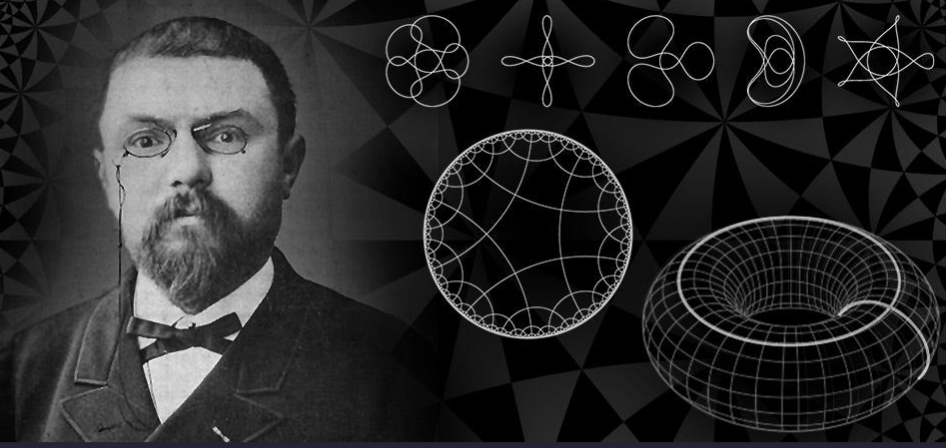
Status: ✅ Solved (By Grigori Perelman)
The Story & Analogy: The Cosmic Balloon Test
Imagine you are wrapping a giant piece of string tightly around a smooth soccer ball. If you pull both ends of the string, the loop will seamlessly shrink down to a single point without getting stuck. Now, try doing the exact same thing on a glazed donut (a torus). If your string goes through the hole of the donut, you can never pull it into a tight point—it will always get trapped by the hole.
In 1904, Henri Poincaré asked a mind-bending question: Is a 3-dimensional sphere the only 3D shape where every possible loop of string can be pulled completely flat?
The Solution
For 100 years, no one could prove it. Finally, 20 years ago, a reclusive Russian genius named Grigori Perelman proved that Poincaré was right. In simple terms, he showed that any 3D shape without a “hole” can be stretched, bent, and molded into a perfect 3D sphere.
🧠 EXPERT COMMENTARY
“Perelman actually turned down a $1 million prize for solving this! He used a mathematical tool called the Ricci flow—which acts like a cosmic iron, smoothing out all the rough edges, wrinkles, and weird tears of any 3D shape until it naturally pops into a perfect sphere.”
2. The Four Color Theorem
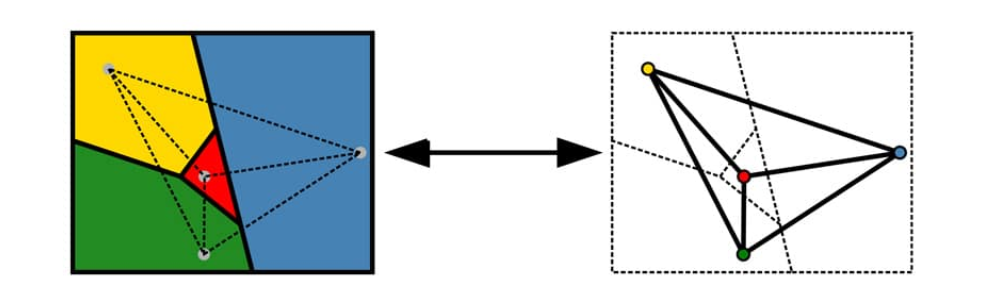
Status: ✅ Solved (With Computer Assistance)
Problem(solved): Can every map on a plane be colored with only four colors such that no two adjacent regions share the same color?
Solution: The Four Color Theorem was proven with computer assistance. Mathematicians used computer programs to check a large number of map configurations and showed that four colors are always sufficient. This involved verifying that there are no maps that require more than four colors.
Example: Take a map of Europe as an example. Try coloring it using only four colors (e.g., red, blue, green, and yellow). Start with one country and color its adjacent countries with different colors. No matter how complex the map is, you’ll find that it’s always possible to color it with four colors without any two adjacent countries having the same color.
3. The Collatz Conjecture
The Collatz Conjecture is a simple but unproven mathematical conjecture that proposes a process about sequences of integers. It was proposed by German mathematician Lothar Collatz in 1937. Over the years, many mathematicians have attempted to unravel the mystery of this conjecture, but it has remained an enigma. Many mathematicians have suggested that this problem may even be out of the reach of present-day mathematics.
The difficulty of the Collatz Conjecture lies in its unpredictable nature. The sequence generated by the simple iterative process can take various routes before eventually reaching 1, making it challenging to establish a general proof. This problem is a classic example of how a simple algorithm can lead to complex and seemingly random behavior and pose a significant challenge to mathematicians.
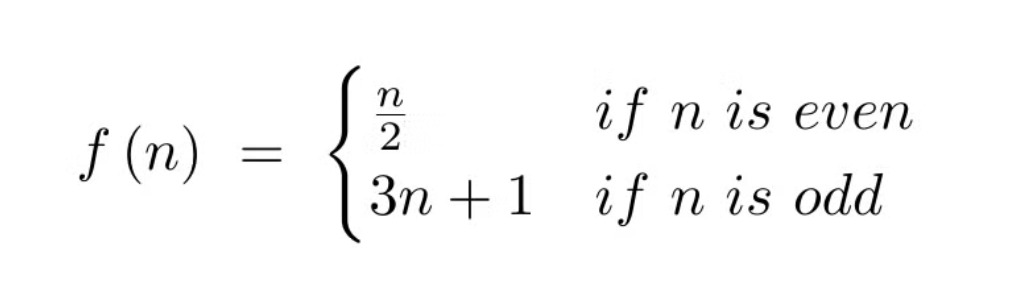
The function f(n) in the figure above, which cuts even numbers in half, cuts odd numbers in triples and then adds to 1, ends up with all of the numbers we examined being 1.
Problem(unsolved):The conjecture is that this is true of all natural numbers (positive integers from 1 to infinity). The conjecture deals with two simple repeating operations performed on any given positive integer and asks if it will eventually transform the given integer into 1. If the given integer is even, it will be divided by 2. If odd, it will be multiplied by 3, and have 1 added to it. Hence the iconic (3n + 1) name.
Example:the integer 16. It is even, thus once divided by 2, it becomes 8. 8 being even, will be divided again, becoming 4, then 2, and eventually 1. In theory, no matter what positive integer the operations are performed on, it will always transform into 1.
Math expert Marty Parks’ comments on the Collatz Conjecture:
“The Collatz Conjecture is a fun one because it illuminates how little we really know about math. You have a very simple recipe to follow: 1. Pick any whole number bigger than 0. 2. Divide it by 2 if its even, or times it by 3 and add 1 if its odd. So far we end up at the number 1 no matter where we start — and no one knows why! Like most of the biggest unsolved problems in mathematics, the difficulty with the Collatz Conjecture is that the tools needed to tackle the problem still need to be developed. This very simple problem is so far beyond the reach of what our current math allows to do that it will be very exciting to see how future mathematicians (or AI) will develop completely unheard-of methods to help find a proof.”
4. Goldbach’s Conjecture
The Goldbach conjecture is one of the most captivating mysteries in mathematics. It was proposed by the German mathematician Christian Goldbach in 1742. Goldbach’s Conjecture shows that every even natural number greater than 2 can be expressed as the sum of two prime numbers.
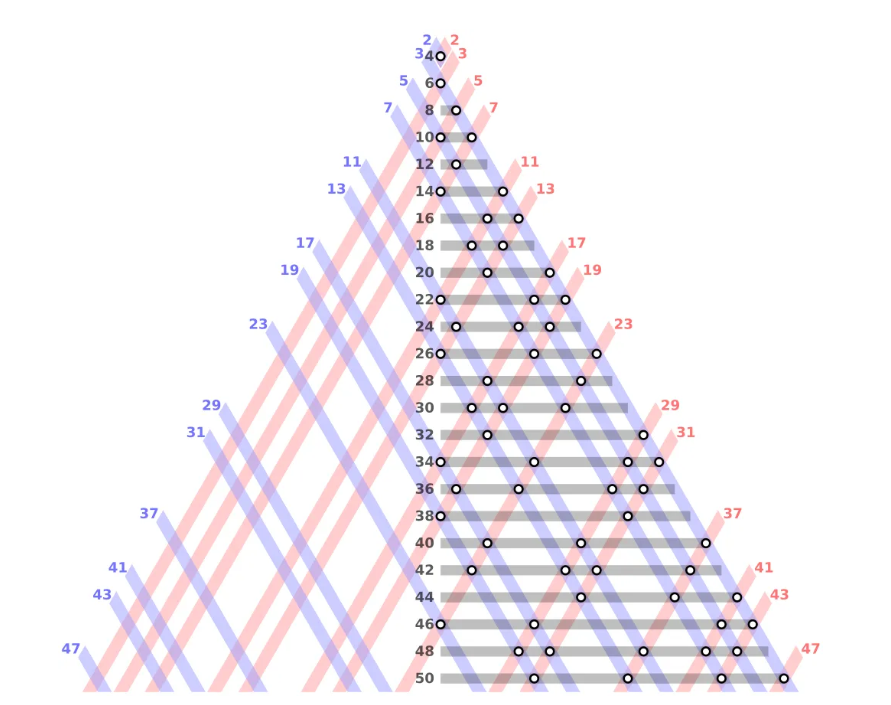
Problem(unsolved): The conjecture was first proposed by Christian Goldbach on June 7, 1742, in a letter to Leonhard Euler. In this letter, Goldbach presented the idea and conjectured that every integer greater than 2 could be expressed as the sum of two prime numbers. Euler wrote back that the first part of Goldbach’s conjecture was highly probable. He noted that “every even integer is the sum of two prime numbers”, but he was unable to provide proof.
Example: 16 = 3 + 13
Progress: Significant progress has been made in understanding this conjecture over a long period. For example, Nils Pipping verified that n = 100,000 in 1938. Later, with the advent of computers, T. Oliveira e Silva conducted distributed computer searches. By 2013 he confirmed the conjecture that “n” is less than or equal to 4×10¹⁸ (and repeated the proof for “n” up to 4 × 10¹⁷). However, a complete and rigorous proof for all even integers greater than 2 remains out of reach.
5. The twin prime conjecture
Proving the twin prime conjecture is a long outstanding problem in number theory. The twin prime conjecture was first formulated by De Polignac in 1849. De Polignac argued that for every natural number “k”, there is an infinite number of primes “p” such that “p+2k” is also prime. The case “k = 1” is the one we are interested in, the Twin Primes Conjecture.
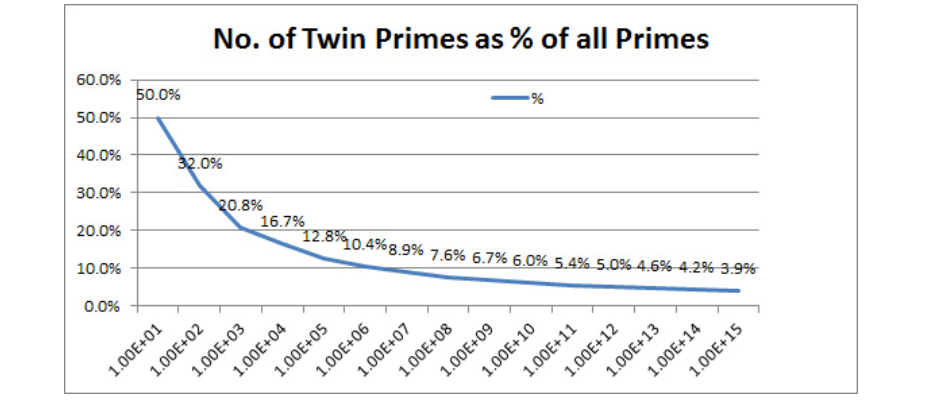
Problem:(unsolved) It is not surprising that the twin prime conjecture revolves around twin prime numbers. These are prime numbers that are either 2 less or 2 more than another prime number, forming pairs of prime numbers such as (5, 7), (13, 15). The conjecture states that there are an infinite number of prime numbers p such that p + 2 is also prime.
Progress: In 2013, Yitang Zhang‘s (a Chinese-American mathematician primarily working on number theory) research took an important step towards proving the existence of infinitely many twin prime numbers. His research showed that there exists a finite upper bound-70 million, for which gaps between pairs of prime numbers exist infinitely often. By April 2014, this limit (the gap between two prime numbers) had shrunk to 246. It indicates significant progress in understanding twin prime numbers.
6. Riemann Hypothesis
The Riemann Hypothesis, formulated by Bernhard Riemann in 1859, is a central problem in number theory that discusses the distribution of prime numbers. The hypothesis focuses on the zeros of Riemann’s zeta function(a video). Building on the work of Swiss mathematician Leonhard Euler, Riemann assumed that all non-trivial zeros of this zeta function lie on a critical line in the complex plane, the critical line Re(s) = 0.5.
Riemann hypothesis will be a landmark achievement in mathematics, especially in the field of cryptography, which is crucial for Internet security. Confirmation of the hypothesis will also greatly improve our understanding of prime numbers and will validate many mathematical papers that currently take the Riemann hypothesis as a given, thus solidifying a wide range of mathematical theories.
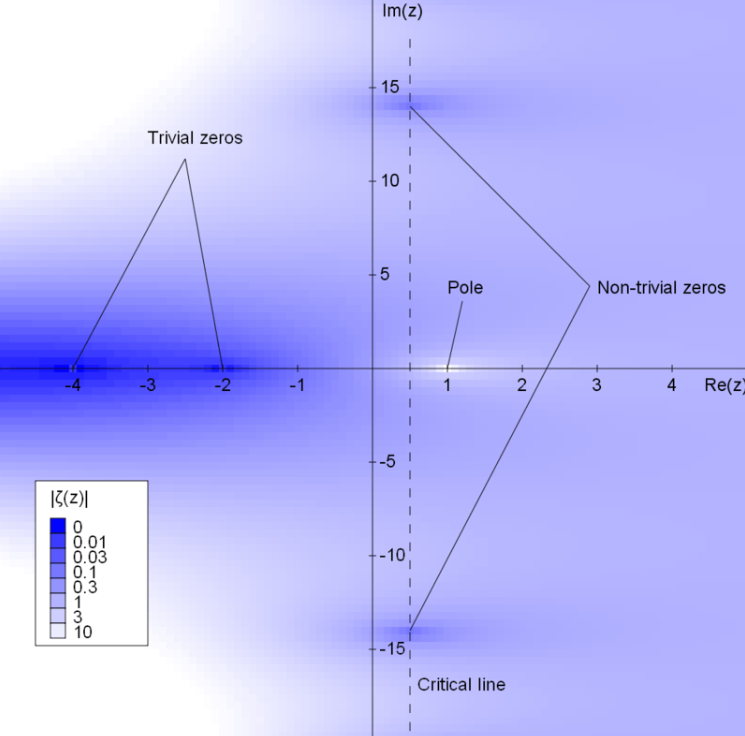
Problem(unsolved): The definition of this function is complex in itself, and the infinity of its zeros adds to the challenge. The proof must convincingly show that all zeros cannot deviate from the expected line, which requires a deep understanding of complex analysis and number theory.
Besides, The main challenge in solving the Riemann Hypothesis is that mathematicians simply have not developed the proper tools. It’s hard to tackle the task. Since the problem uses several seemingly disparate parts of mathematics, finding an appropriate restatement of the problem to match the tools currently available to mathematicians seems to be one of the biggest stumbling blocks to solving the Riemann hypothesis.
Many mathematicians have tried to prove the Riemann Hypothesis over the years to no avail. The hypothesis is even part of the Clay Mathematics Institute’s Millenium Prize Problems, a list of seven unsolved, complex math problems, each with a $1 million reward.
Marty Parks, math expert, holds a BA in Mathematics and an MS in Electrical Engineering. Let’s hear his thoughts on this unique problem.
“Solving the Riemann Hypothesis would greatly deepen humanity’s understanding of prime numbers and would likely attract more mathematicians to do research, but most practical applications that involve prime numbers (in cryptography) can already assume that the hypothesis is true if they need to use it for something. The primary challenge is the fact that mathematicians simply don’t have the right tools developed to handle the job. Because the problem uses several seemingly disparate parts of mathematics, finding an adequate reformulation of the problem to work with the current tools mathematicians have access to seems to be one of the biggest stumbling blocks to solving the Riemann Hypothesis.”
7. The existence of odd perfect numbers
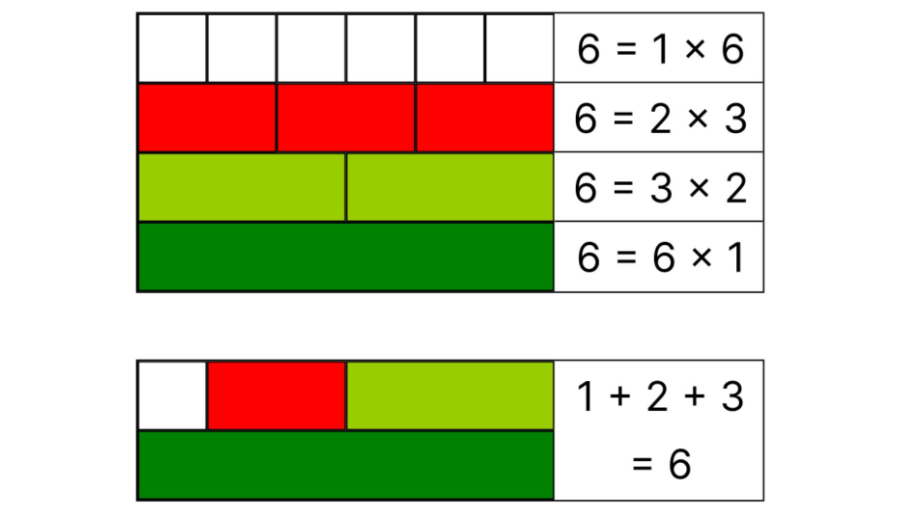
The existence of odd perfect numbers is a deep unsolved mathematical mystery. In math, a perfect number is a positive integer “n” that equals the sum of all divisors except the number itself. In other words: n = 1 + 2 + 3 + … + (n-1). A famous example of a perfect number is 28. The divisors of 28 are 1, 2, 4, 7 and 14. However, the existence of odd perfect numbers remains uncertain.
Problem: In 1496, Jacques Lefebvre made the point that all perfect numbers can be generated according to Euclid’s law. This implied that there could be no odd perfect numbers, setting the stage for centuries of speculation. Recently, Carl Pomerance presented a heuristic argument that the existence of odd perfect numbers is highly unlikely. This argument has increased skepticism about their existence.
8. The solitary number problem
The solitary number problem delves into the field of solitary numbers, which are integers that do not have any “friends”, in the mathematical sense (e.g., they do not share a common relationship with any other number). Friendly numbers are numbers that have the same abundance index (the ratio of the sum of the number’s divisors to the number itself).
Solitary numbers include prime numbers, prime powers, and numbers for which the greatest common divisor of the number and the sum of its divisors (expressed as sigma(n)) equals 1. For example, the number 5 is a solitary number. The divisors of 5 are 1 and 5, and their sum is 6. The greatest common divisor of 5 and 6 is 1.
Problem(unsolved): While it is possible to prove the solitariness of some numbers by examining their properties, proving the solitariness of others is challenging. For example, numbers like 10, 15, and 20 are believed to be solitary numbers, but providing conclusive proof has remained elusive. The concept of solitary numbers has fascinated mathematicians for many years. While prime numbers are well-known solitary numbers, other integers also exhibit solitary properties, even if their greatest common divisor with sigma(n) is not 1.
Progress: In 2022, Sourav Mandal shed light on the potential nature of 10’s friend, proposing a specific form. It must follow if it exists, adding an intriguing layer to the problem. Furthermore, examples like 24, classified as friendly, and possessing 91,963,648 as its smallest friend, illustrate the diversity in the classification of numbers as friendly or solitary.
9. The Birch and Swinnerton-Dyer Conjecture
The Birch and Swinnerton-Dyer conjecture is a far-reaching and complex problem in number theory, focusing on elliptic curves. The conjecture relates the number of rational solutions (points whose two coordinates are rational numbers) on an elliptic curve to certain features of the L-function associated with that curve.
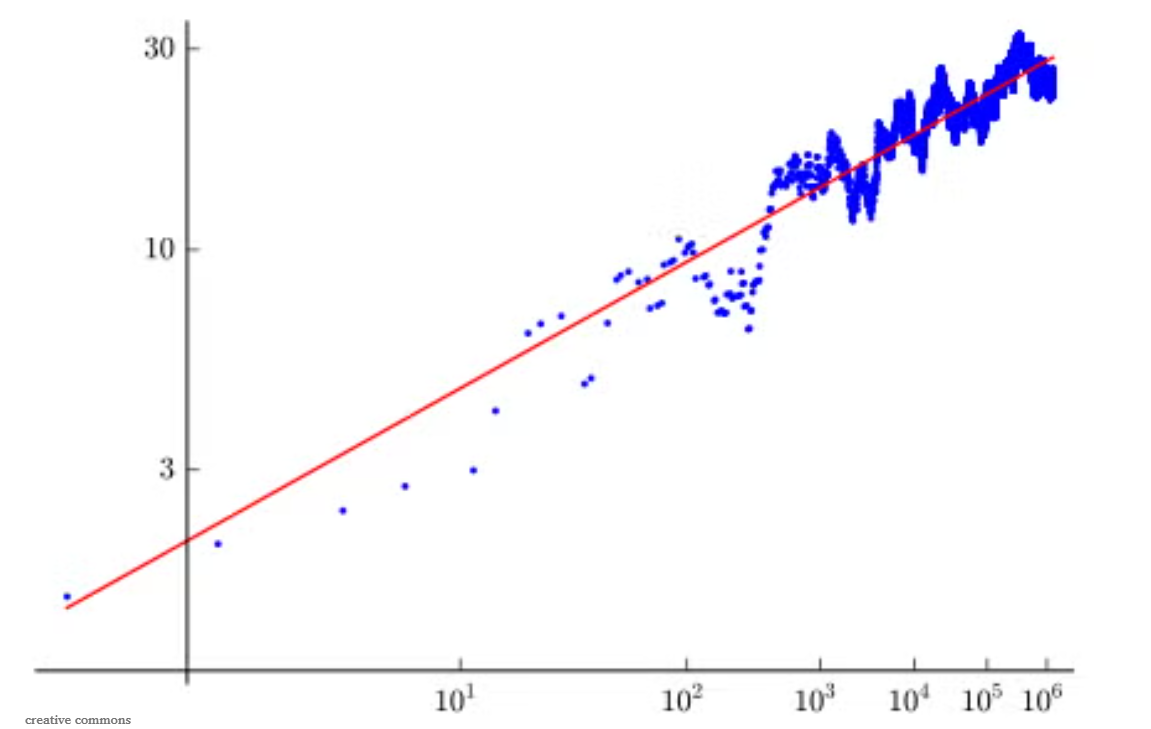
Problem(unsolved):The resolution of this conjecture would have large implications in several areas of mathematics, particularly in number theory and algebraic geometry. It would increase our understanding of elliptic curves, which are central to many mathematical fields, including cryptography, and could lead to advancements in digital security and new encryption technologies. The conjecture is notoriously tricky to solve due to its deep connections to various complex mathematical concepts such as L-functions, elliptic curves, and modular forms.
Progress: While there has been significant progress in understanding specific cases and aspects of the conjecture, general proof or disproof remains distant. The conjecture forms part of the Langlands program, which aims to unify different areas of mathematics. Advances within this program have shed some light on the conjecture, but a complete solution is still pending.
Math expert Marty Parks’ comments on the Birch and Swinnerton-Dyer Conjecture
“The Birch and Swinnerton-Dyer Conjecture deals with elliptic curves in number theory, and these types of problems tend to require a lot of advanced ‘machinery’ to even begin approaching a basic understanding of it. In terms of difficulties faced in trying to solve this problem, the Birch and Swinnerton-Dyer Conjecture suffers from many of the same issues that the Riemann Hypothesis suffers from. It’s likely that some incredibly advanced techniques will be necessary to find a solution. If solved, there are many other math theorems in number theory that would also be solved since they use assumptions from this theorem.”
10. Hodge Conjecture
The Hodge conjecture was proposed by William Hodge in 1941 and involves algebraic geometry. It shows a fundamental relationship between collections of simple geometric pieces, called algebraic cycles, and complex shapes of certain “nice” spaces, called projective algebraic varieties. The Hodge conjecture asserts that these algebraic cycles can approximate the shapes of these varieties.
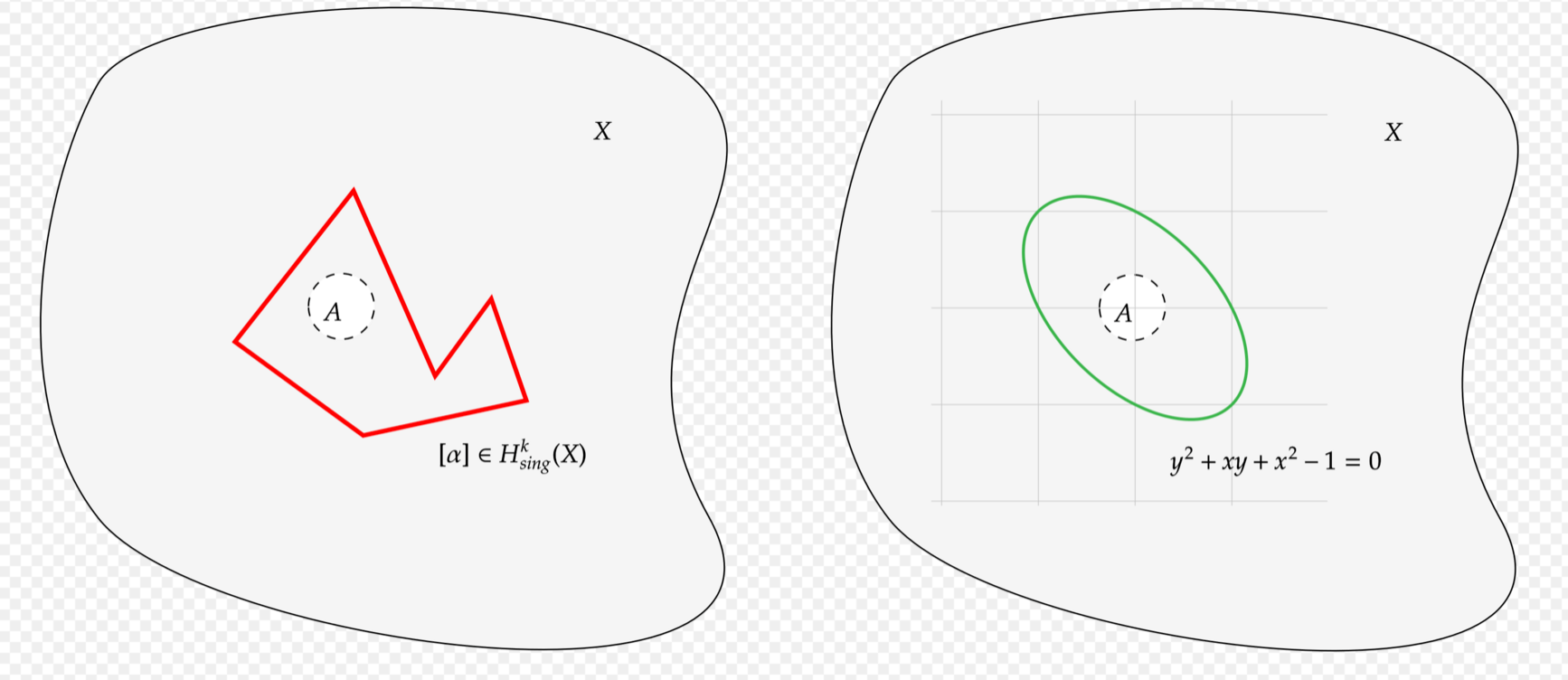
Problem(unsolved): In short, solving this problem is like putting together a very complex, abstract puzzle. The Hodge conjecture is very difficult because of its complex nature and deep connections to various areas of mathematics. It requires a deep understanding of algebraic geometry, complex geometry, and topology.
A solution to the Hodge conjecture could advance our understanding of higher-dimensional mathematical structures. It also could have applications in areas such as string theory and other parts of theoretical physics.
Math expert Marty Parks’ comments on the Hodge conjecture:
“The Hodge Conjecture is such a hard problem because many types of the structures it references don’t really exist, and it’s really hard to just create those types of structures (logically, speaking). Since the Hodge problem relates to topology (more specifically cohomotopy), its solution would provide mathematicians better tools to solve related problems in algebraic topology, helping physicists, computer scientists, and even material scientists with new methods to analyze problems related to space (in physics), to network connectivity (in computer science), and analysis of material defects (in material science).”
FAQs About Hardest Math Problems
Answer: The hardest math problems are divided into unsolved mysteries and famous solved proofs:
Unsolved (The Millennium Prize Problems): * Riemann Hypothesis (Prime numbers distribution) P vs NP Problem (Computer science & logic)
Navier-Stokes/Yang-Mills/Hodge/Birch & Swinnerton-Dyer
Famous Conjectures: Goldbach, Twin Prime, Odd Perfect Numbers.
Famous Solved Problems: * Poincaré Conjecture (Solved by Grigori Perelman) Fermat’s Last Theorem (Solved by Andrew Wiles)
Four-Color Theorem (Map coloring proof)
Answer: No, it remains completely unsolved. Though users often search for it as “3x-1,” it is formally known as the Collatz Conjecture or the 3x+1 problem.
The Rule: Take any positive integer. If it’s even, divide it by 2; if it’s odd, multiply by 3 and add 1. Repeat the process.
The Mystery: The conjecture states that every number will eventually spiral down to 1.
Current Status: Computers have verified this for numbers up to 2.36 quintillion (2.36 x 10²¹), but a universal mathematical proof still outreaches modern mathematics. Famous mathematician Paul Erdős once remarked, “Mathematics may not be ready for such problems.”
Answer: For high school seniors (especially in AP Calculus or IB Math), the ultimate hurdle is Related Rates and Optimization.
The Challenge: Solving multi-step calculus word problems—such as calculating the changing water level rate in an inverted cone tank using implicit differentiation.
Core Skills Needed: Connecting advanced geometry formulas with derivatives under tight time constraints.
Answer: For high school freshmen (Algebra 1 / Geometry), the peak difficulty lies in Systems of Linear Equations Word Problems.
The Challenge: Translating real-world scenarios—like “upstream vs. downstream boat speeds against a current”—into accurate linear equations (Ax + By = C).
Core Skills Needed: Abstract critical thinking and algebraic elimination/substitution.
Conclusion
These are the top 10 hardest math problems in the world. Some of them have been solved perfectly, while the complexity of some still poses a challenge to the academic world. For math enthusiasts, this is an arena where they can continue to hone their problem-solving skills. WuKong provides high-quality online math classes for kids that help learners build strong foundations in problem solving and critical thinking.
Discovering the maths whiz in every child,
that’s what we do.
Suitable for students worldwide, from grades K-12.
Get started free!
Nathan, a graduate of the University of New South Wales, brings over 9 years of expertise in teaching Mathematics and Science across primary and secondary levels. Known for his rigorous yet steady instructional style, Nathan has earned high acclaim from students in grades 1-12. He is widely recognized for his unique ability to blend academic rigor with engaging, interactive lessons, making complex concepts accessible and fun for every student. Nathan also has extensive experience helping students prepare for the AMC 8 and Math Kangaroo competitions, guiding them to achieve outstanding results in international math contests.


![5 Best Math Learning Websites For All Levels [2026]](https://wp-more.wukongedu.net/blog/wp-content/uploads/2024/04/image-77-520x293.png "5 Best Math Learning Websites For All Levels [2026]")


![60+ Top Fun Summer Activities for Kids [2025]](https://wp-more.wukongedu.net/blog/wp-content/uploads/2024/05/image-177-520x293.png "60+ Top Fun Summer Activities for Kids [2025]")


Comments0
Comments