

20CM to Inches: How Many Inches Are in 20 Centimeters?


How many inches are in 20 centimeters?
For a quick conversion, simply divide the number of centimeters by 2.54 (or multiply by 0.3937); thus, 20 cm ≈ 7.87 inches (the precise value is approximately 7.874 inches).
In everyday life, 20 cm is roughly equivalent to the radius of a standard dinner plate, the length of a typical ruler, or the distance from an adult male’s wrist to the tip of his middle finger.
Discovering the maths whiz in every child,
that’s what we do.
Suitable for students worldwide, from grades K-12.
Get started free!This article features an online centimeter-to-inch conversion calculator that accepts any input value in centimeters or inches, providing precise results with a single click—no manual calculation required. This type of length unit conversion aligns with the U.S. Common Core State Standards for Grade 4 Mathematics (4.MD.A.1), which focuses on recognizing the relative sizes of units within a single measurement system and mastering unit conversions; it also extends to standard 5.MD.A.1, which involves solving real-world problems that require converting between metric and U.S. customary units.

An online Centimeters-to-Inches Converter
📏 Height & Length Converter / 长度换算器
Convert between Metric and Imperial units / 公制与英制单位转换
170 Centimeters (厘米) = 5.5774 Feet (英尺)
20cm is How Many Inches?
When you ask, “how much is 20cm in inches?” or “how long is 20cm in inches?”, you’re looking for the exact conversion. Here’s how it breaks down:
Discovering the maths whiz in every child,
that’s what we do.
Suitable for students worldwide, from grades K-12.
Get started free!- 20 cm × 0.3937 in/cm = 7.87 inches
This means an object measuring 20 centimeters is approximately 7.87 inches long. Such conversions are valuable in many contexts, including crafting, construction, and cooking, where accuracy in measurements is crucial.
What is 20 CM in Inches?
Understanding what 20 cm equals in inches is essential across various fields, including science, engineering, and everyday tasks. However, to grasp this conversion fully, it’s helpful to first understand the definitions of centimeters and inches.

Centimeter (cm)
The centimeter is a unit of length in the metric system, which is widely used around the world. The metric system is based on powers of ten and is designed to be straightforward and easy to use. One centimeter is one-hundredth of a meter, making it a smaller unit suitable for measuring shorter lengths.
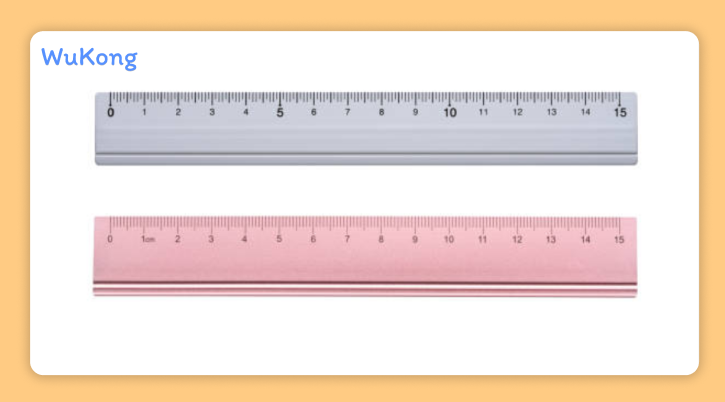
Inch (in)
On the other hand, an inch (in) is a unit of length in the US customary system. One inch is equal to 2.54 centimeters. The customary system is primarily used in the United States, which can lead to confusion when dealing with metric measurements. The inch is mostly used in the United States, Canada, and the United Kingdom. It is also sometimes used in Japan (as well as other countries) in relation to electronic parts, like the size of display screens.
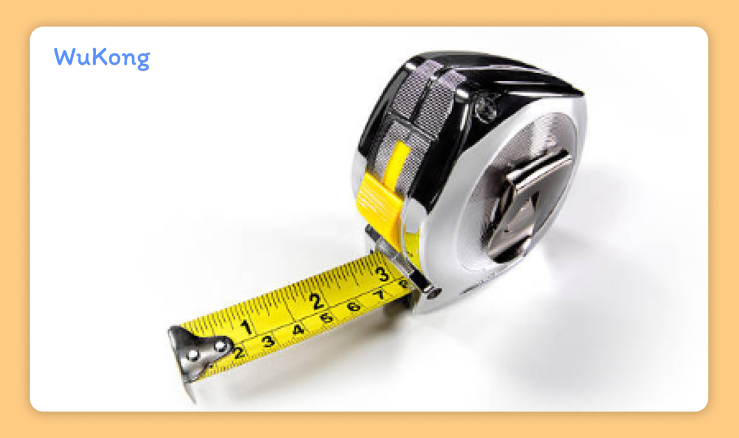
In short, it’s crucial to understand the difference between these two systems for accurate measurements, especially when converting between centimeters and inches. When measuring lengths, knowing that one centimeter is about 0.3937 inches can help in practical applications.
How to Convert Centimeters to Inches?
To convert 20 cm to inches, simply divide the length in centimeters by 2.54. This process can be applied to any length in centimeter to find its equivalent in inches. For quick reference, remember:
- 1 inch = 2.54 cm
- To convert cm to inches, use the formula: inches = cm / 2.54
Here are step-by-step guide to convert centimeters to inches for you.
Step 1. Understand the Conversion Factor:
The relationship between centimeter and inch is defined by the fact that one inch is equal to 2.54 centimeters. This reflects the difference between the metric system (where centimeters are used) and the US customary system (where inches are standard). To convert from centimeters to inches, you need to divide the number of centimeters by 2.54.
Step 2. Use the Formula:
The formula to convert centimeter (cm) to inches (in) is:

Step 3. Apply the Formula for 20 centimeters:

Step 4. Perform the Calculation:
Divide 20 inches by 2.54, then the approximately 7.87 inches.

Centimeters to Inches Conversion Table
The following Centimeters to Inches Conversion Table provides a quick reference for converting various centimeter measurements into their equivalent inches, making it easier to work with different unit systems. You can also download a free PDF of this conversion table for easy access anytime you need to convert 1 to 100 centimeters to inches.
Centimeters to Inches Conversion Table – Download a free PDF
| 1-10 Centimeters | Inches (in) | 11-20 Centimeters | Inches (in) |
| 1 cm | 0.39 in | 11 cm | 4.33 in |
| 2 cm | 0.79 in | 12 cm | 4.72 in |
| 3 cm | 1.18 in | 13 cm | 5.12 in |
| 4 cm | 1.57 in | 14 cm | 5.51 in |
| 5 cm | 1.97 in | 15 cm | 5.91 in |
| 6 cm | 2.36 in | 16 cm | 6.30 in |
| 7 cm | 2.76 in | 17 cm | 6.69 in |
| 8 cm | 3.15 in | 18 cm | 7.09 in |
| 9 cm | 3.54 in | 19 cm | 7.48 in |
| 10 cm | 3.94 in | 20 cm | 7.87 in |
More Length & Height Conversion
Mastering length conversions is a foundational skill in 4th Grade (CCSS.MATH.CONTENT.4.MD.A.1) and 5th Grade (CCSS.MATH.CONTENT.5.MD.A.1). Students learn the relative sizes of measurement units within the metric system (cm) and US customary system (inches, feet, yards, miles).
This table helps students practice scaling units and solving real-world measurement problems.
| Input Measurement | Conversion Result | Real-world Object Reference | Detailed Guide & Practice |
| 5 cm | 1.97 Inches | Length of a AA Battery | 5 cm to inches |
| 15 cm | 5.91 Inches | Length of a Standard Pen | 15 cm to inches |
| 17 cm | 6.69 Inches | Average Dollar Bill Length | 17 cm to inches |
| 18 cm | 7.09 Inches | Width of a Standard Envelope | 18 cm to inches |
| 20 cm | 7.87 Inches | Length of a Dinner Plate | 20 cm to inches (this) |
| 25 cm | 9.84 Inches | Length of a Standard Tablet | 25 cm to inches |
| 30 cm | 11.81 Inches | A Standard School Ruler | 30 cm to inches |
| 40 cm | 15.75 Inches | Height of a Bowling Pin | 40 cm to inches |
| 80 cm | 31.50 Inches | Height of a Standard Door Knob | 80 cm to inches |
| 100 cm | 39.37 Inches | Length of a Guitar | 100 cm to inches |
| 160 cm | 5.25 Feet | Height of a Refrigerator | 160 cm to feet |
| 170 cm | 5.58 Feet | Average Height of an Adult | 170 cm to feet |
| 190 cm | 6.23 Feet | Length of a Standard Bed | 190 cm to feet |
| 5 Feet | 60 Inches | Height of a Park Bench | 5 feet to inches |
| 1 Yard | 36 Inches | Width of a Typical Door | Inches in a yard |
| 1 Mile | 5,280 Feet | About 17.5 Football Fields | Feet in a mile |
FAQ About 20 CM to Inches
To convert centimeters to feet, you can use the conversion factor where 1 inch equals 2.54 cm and 1 foot equals 12 inches.
Convert 20 cm to inches: 20 cm ÷ 2.54 = 7.87 inches
Convert inches to feet: 7.87 in ÷ 12 = 0.656 feet
So, 20 centimeters is approximately 0.656 feet.
No, 20 cm is not equal to 8 inches. As previously stated, 20 cm is approximately 7.87 inches. This common misconception arises from rounding errors or misinterpretations of metric and customary measurements.
The metric system is an internationally recognized decimal-based system of measurement. It was developed in France during the late 18th century and has since been adopted by most countries around the world. Key features of the metric system include:
Units of Measurement: The metric system uses base units for various measurements, including: Length: meter (m)
Mass: kilogram (kg)
Volume: liter (L)
Decimal-Based: The metric system is based on powers of ten, making calculations straightforward. For example, 1 kilometer is 1,000 meters, and 1 gram is 1,000 milligrams.
Standardization: The metric system provides a standardized set of measurements, which facilitates international trade, scientific research, and communication.
The US customary system is a system of measurement primarily used in the United States. It is derived from the British Imperial system and consists of various units for measuring length, weight, and volume. Key features include:
Unit of Measurement: Common units in the US customary system include: Length: inch (in), foot (ft), yard (yd), mile
Weight: ounce (oz), pound (lb), ton
Volume: fluid ounce (fl oz), pint (pt), quart (qt), gallon (gal)
Non-Decimal: Unlike the metric system, the US customary system does not use a decimal base, which can make conversions more complex. For example, 1 foot equals 12 inches, and 1 yard equals 3 feet.
Regional Use: The US customary system is predominantly used in the United States, while most other countries have adopted the metric system. This difference can lead to confusion in scientific, engineering, and trade contexts.
Discovering the maths whiz in every child,
that’s what we do.
Suitable for students worldwide, from grades K-12.
Get started free!
I am an educator from Yale University with ten years of experience in mathematics education, including extensive hands-on experience preparing students for the SAT Math section. I believe that my professional expertise and refined teaching approach will allow me to make a meaningful contribution to the growth of Wukong Education. Within this community, I look forward to sharing insights on children’s educational psychology and effective learning strategies, with the hope of providing quality learning resources that help more children grow into confident, capable learners.


Comments0
Comments