

Colors in Chinese: Vocabulary, Pronunciation & Cultural Meanings


Have you ever wondered why red envelopes are given during Chinese New Year, or why brides often wear red instead of white? Dive into the colorful world of colors in Chinese (颜色 yánsè in Mandarin)!Learning these basic terms boosts your vocabulary and gives you insight into Chinese culture. Each color has a deep symbolic meaning.
In this guide, we’ll explore essential colors in Chinese, complete with pinyin pronunciations, example sentences, and cultural insights. Whether you’re a beginner preparing for daily conversations or curious about traditions, this will help you describe the world more vividly in Mandarin. Let’s paint your language journey with vibrant shades!
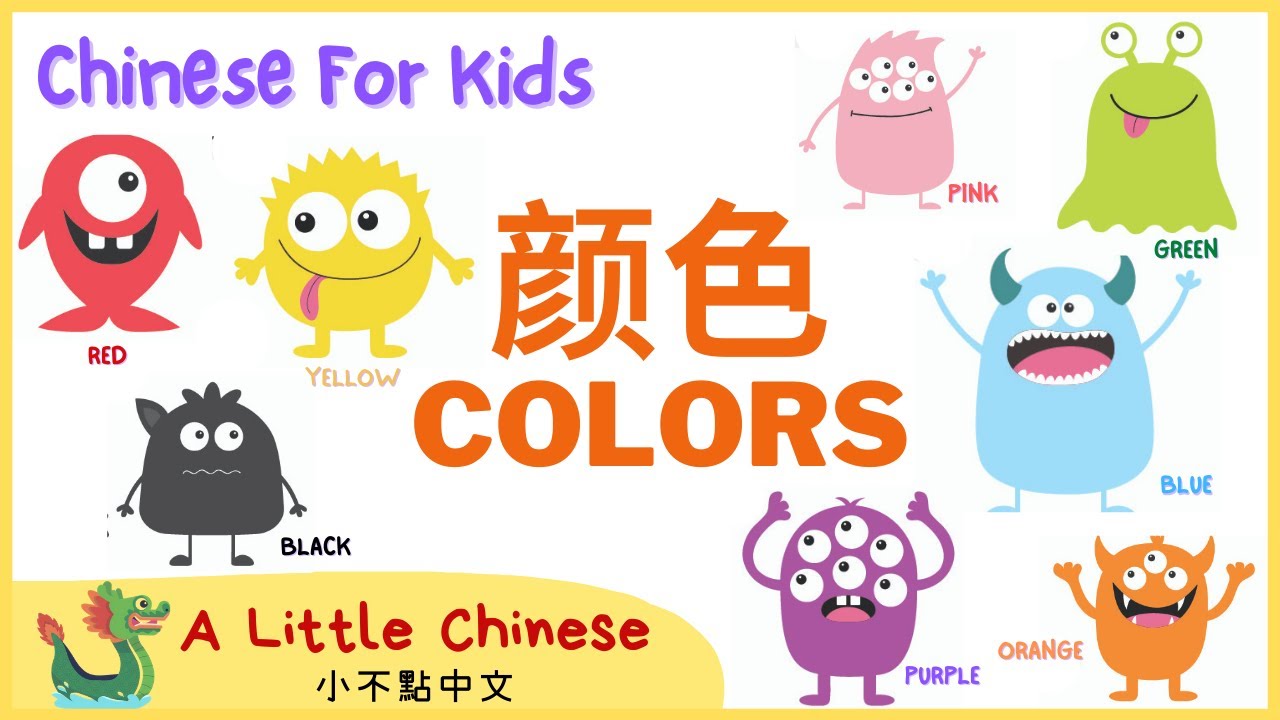
Basic Colors in Chinese: Vocabulary and Pronunciations
Mastering colors in Chinese starts with the fundamentals. Most color words end with 色 (sè), meaning “color.” Colors typically come before the noun, often followed by 的 (de) when describing objects.
Learn authentic Chinese from those who live and breathe the culture.
Specially tailored for kids aged 3-18 around the world!
Get started free!Here’s a handy list of the most common colors in Chinese:
Red — 红色 (hóngsè) Pronunciation: hóng (rising tone) sè (falling tone) Example: 我喜欢红色的苹果。 (Wǒ xǐhuān hóngsè de píngguǒ.) — I like red apples.
Blue — 蓝色 (lánsè) Pronunciation: lán (rising tone) sè (falling tone) Example: 天空是蓝色的。 (Tiānkōng shì lánsè de.) — The sky is blue.
Green — 绿色 (lǜsè) Pronunciation: lǜ (falling tone) sè (falling tone) Example: 树叶是绿色的。 (Shùyè shì lǜsè de.) — The leaves are green.
Yellow — 黄色 (huángsè) Pronunciation: huáng (rising tone) sè (falling tone) Example: 香蕉是黄色的。 (Xiāngjiāo shì huángsè de.) — Bananas are yellow.
Black — 黑色 (hēisè) Pronunciation: hēi (falling-rising tone) sè (falling tone) Example: 我的猫是黑色的。 (Wǒ de māo shì hēisè de.) — My cat is black.
White — 白色 (báisè) Pronunciation: bái (falling-rising tone) sè (falling tone) Example: 雪是白色的。 (Xuě shì báisè de.) — Snow is white.
Orange — 橙色 (chéngsè) or 橘色 (júsè) Pronunciation: chéng (rising tone) sè Example: 橙子是橙色的。 (Chéngzi shì chéngsè de.) — Oranges are orange.
Purple — 紫色 (zǐsè) Pronunciation: zǐ (falling-rising tone) sè Example: 葡萄是紫色的。 (Pútáo shì zǐsè de.) — Grapes are purple.
Pink — 粉红色 (fěnhóngsè) Pronunciation: fěn (falling-rising tone) hóng sè Example: 我喜欢粉红色的花。 (Wǒ xǐhuān fěnhóngsè de huā.) — I like pink flowers.
Brown — 棕色 (zōngsè) or 褐色 (hèsè) Pronunciation: zōng (falling tone) sè Example: 咖啡是棕色的。 (Kāfēi shì zōngsè de.) — Coffee is brown.
Practice saying these aloud—tones are key in Mandarin! Start with simple sentences like “这是什么颜色?” (Zhè shì shénme yánsè?) — What color is this?
The Deep Cultural Meanings Behind Colors in Chinese
Colors in Chinese culture go far beyond descriptions—they’re tied to ancient philosophy, the five elements (wǔxíng), and emotions. Understanding these adds depth to your learning and helps avoid cultural mix-ups.
What does the color red symbolise in chinese culture?
Red: Luck, Joy, and Celebration
Red (红色 hóngsè) is the most auspicious color, symbolizing good fortune, happiness, and vitality. Linked to fire in the five elements, it’s everywhere during festivals.

You’ll see red decorations, lanterns, and couplets during Spring Festival. Brides wear red for prosperity, and red envelopes bring blessings. Fun fact: Red wards off evil spirits!
What does the color yellow mean in chinese culture?
Yellow: Royalty and Prosperity
Yellow (黄色 huángsè) represents earth, neutrality, and imperial power. Historically reserved for emperors, it’s associated with glory and heroism.
Today, golden yellow evokes wealth. The Yellow River (黄河 Huáng Hé) symbolizes China’s ancient roots.
What does the color green mean in chinese culture?
Green: Growth, Health, and Harmony
Green (绿色 lǜsè) stands for nature, renewal, and vitality—perfect for spring. It also means health and prosperity.
Be mindful: In some contexts, like “wearing a green hat” (戴绿帽子 dài lǜ màozi), it implies misfortune, but generally, it’s positive.
What does the color blue mean in chinese culture?
Blue: Immortality and Healing
Blue (蓝色 lánsè) evokes calm skies and seas, symbolizing peace and growth. Traditionally blended with green as 青 (qīng), it represents wood and spring.
Black and White: Balance of Yin and Yang
Black (黑色 hēisè) links to water, mystery, and power—neutral yet profound.
White (白色 báisè) means purity but also mourning (worn at funerals). It contrasts red’s joy.
Purple signifies nobility and immortality, while pink (as light red) shares red’s warmth.
These meanings stem from traditions like the five elements: red (fire), yellow (earth), black/blue (water), green (wood), white (metal).
What are the Chinese elements
The Five Elements in Chinese Philosophy: Wǔxíng (五行)—Chinese Zodiac Elements
In traditional Chinese philosophy, the “five elements” are known as Wǔxíng (五行), often translated as the Five Phases, Five Agents, or Five Processes. Unlike the classical Western four elements (earth, air, fire, water), which are seen as static building blocks, the Wǔxíng represent dynamic, interconnected processes of change and transformation in the universe.
The five elements are:
- Wood (木, mù)
- Fire (火, huǒ)
- Earth (土, tǔ)
- Metal (金, jīn)
- Water (水, shuǐ)
This concept originated in ancient China (around the Warring States period, refined during the Han Dynasty) and forms the foundation for many fields, including traditional Chinese medicine (TCM), feng shui, astrology, martial arts, and cosmology. It explains how phenomena interact through cycles of balance and change.

Key Associations
Each element corresponds to seasons, directions, colors, emotions, organs, and more. Here’s a summary table:
| Element | Chinese | Season | Direction | Color | Emotion/Quality | Organ (TCM) | Symbolism |
| Wood | 木 (mù) | Spring | East | Green/Blue (青 qīng) | Anger/Growth | Liver/Gallbladder | Expansion, vitality, creativity |
| Fire | 火 (huǒ) | Summer | South | Red | Joy/Passion | Heart/Small Intestine | Warmth, transformation, joy |
| Earth | 土 (tǔ) | Late Summer | Center | Yellow | Worry/Stability | Spleen/Stomach | Nourishment, balance |
| Metal | 金 (jīn) | Autumn | West | White | Grief/Structure | Lungs/Large Intestine | Contraction, purity |
| Water | 水 (shuǐ) | Winter | North | Black/Blue | Fear/Wisdom | Kidneys/Bladder | Storage, flow, adaptability |
The Cycles of Interaction
The Wǔ xíng aren’t just a list—they interact in two main cycles that maintain harmony (or cause imbalance if disrupted):
Generating Cycle (相生, xiāng shēng – “mutual creation”):
- Wood feeds Fire
- Fire creates Earth (ashes)
- Earth bears Metal (minerals)
- Metal collects Water (condensation)
- Water nourishes Wood (growth)
This cycle promotes growth and balance.
Controlling Cycle (相克, xiāngkè – “mutual overcoming”):
- Wood breaks Earth (roots)
- Earth absorbs Water
- Water extinguishes Fire
- Fire melts Metal
- Metal chops Wood (axe)
This prevents any one element from dominating.
Using Colors in Chinese in Everyday Scenarios and Festivals
Now, let’s apply colors in Chinese to real life!
In daily conversation:
- Shopping: “这个蓝色裙子好看吗?” (Zhè gè lán sè qún zi hǎokàn ma?) — Does this blue skirt look good?
- Describing: “北京的故宫有红色的墙。” (Běijīng de Gùgōng yǒu hóng sè de qiáng.) — Beijing’s Forbidden City has red walls.
During festivals:
- Chinese New Year: Red dominates for luck—lanterns, fireworks, and outfits.
- Weddings: Red dresses and decorations for happiness.
- Nature: Green for parks in spring, yellow for autumn leaves.
Try this simple quiz to test yourself:
- What color symbolizes luck? (Answer: Red 红色)
- Which is associated with mourning? (Answer: White 白色)
- Favorite color? “我最喜欢的颜色是…” (Wǒ zuì xǐ huān de yán sè shì…)
Share your answers in the comments!
Why Learning Colors in Chinese Matters
Exploring colors in Chinese enriches your Mandarin skills and cultural understanding. From basic vocabulary to symbolic depths, you’ve now got tools to describe vividly and connect meaningfully.Keep practicing—label objects around you in Chinese, or watch videos about festivals. Ready to take your learning further? Join Wukong Education’s international Chinese courses to deepen your learning with expert guidance, interactive lessons, and a supportive community. Start your colorful Mandarin adventure today!
FAQ
In Chinese culture, red (红色 hóng sè) symbolizes luck, happiness, and celebration. It is commonly used during festivals, weddings, and the Chinese New Year because it is believed to bring good fortune.
Unlike in many Western cultures, white (白色 bái sè) in Chinese culture is often associated with mourning and funerals, not celebrations. Because of this, white is usually avoided at weddings and joyful events.
Chinese color words are pronounced using pinyin with tones, which are essential for correct meaning.
For example:
红色 — hóng sè (rising tone + falling tone)
黑色 — hēi sè (high level tone + falling tone)
Practicing tones is key when learning colors in Chinese.
In most cases, yes. Basic color adjectives are commonly followed by 色 (sè), especially in beginner Mandarin, such as 蓝色 (lán sè) or 绿色 (lǜ sè). In advanced usage, 色 may sometimes be omitted in descriptive contexts.
Learn authentic Chinese from those who live and breathe the culture.
Specially tailored for kids aged 3-18 around the world!
Get started free!
With over a decade of dedication to the education sector, I specialize in educational innovation and practice, deeply researching the construction of the basic education ecosystem and the cultivation of students’ core competencies. Holding a Doctorate in Education from Beijing Normal University, I integrate theoretical research with frontline teaching, excelling in stimulating students’ internal learning motivation through interdisciplinary teaching methods. Guided by the mission of “enabling every child to embrace suitable education”, I promote educational equity and personalized development, helping students unlock infinite possibilities in their growth. I am committed to injecting vitality into the high – quality development of education with professional expertise.


![China Phone Number: A Comprehensive Guide [2026 Updated]](https://wp-more.wukongedu.net/blog/wp-content/uploads/2024/01/image-162-最大宽度-1024-最大高度-768-520x293.webp "China Phone Number: A Comprehensive Guide [2026 Updated]")


![High School Rankings | Top 10 Picks For Higher Education [2025 Updated]](https://wp-more.wukongedu.net/blog/wp-content/uploads/2024/01/image-420-520x293.png "High School Rankings | Top 10 Picks For Higher Education [2025 Updated]")

![14 Best Mandarin Courses & Apps for Students [2025 Updated]](https://wp-more.wukongedu.net/blog/wp-content/uploads/2024/01/image-464-1-520x293.png "14 Best Mandarin Courses & Apps for Students [2025 Updated]")
![Unravelling the Tradition of Chinese New Year's Eve Dinner [2025 Updated]](https://wp-more.wukongedu.net/blog/wp-content/uploads/2024/01/image-321-520x293.png "Unravelling the Tradition of Chinese New Year's Eve Dinner [2025 Updated]")

Comments0
Comments